Insert Molding Technology: Process Logic, Design Rules, and Manufacturing Considerations
Insert Molding Technology is a specialized injection molding method used to combine plastic resin with metal or other non-plastic inserts in a single molded component. Instead of assembling separate parts after molding, the insert is placed into the mold first, and molten plastic is injected around it to create a mechanically integrated part with threads, terminals, electrodes, conductive paths, fastening features, or structural reinforcement.
For procurement managers, product engineers, and industrial project teams, this process is valuable because it can reduce assembly steps, improve retention force, support compact product architecture, and increase functional integration. However, it also requires careful mold design, insert positioning, material selection, process control, and quality verification.
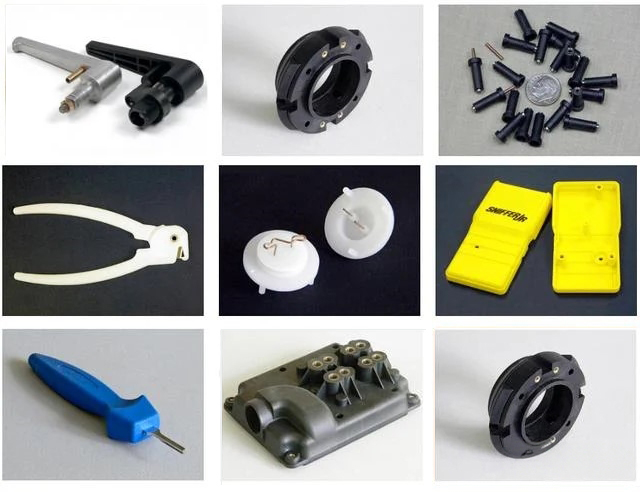
What Is Insert Molding?
In simple terms, insert molding is the process of placing a pre-made insert into an injection mold and then molding plastic around it. After cooling and ejection, the insert is locked inside or partially exposed within the plastic body, forming one integrated component.
The insert can be metal, wire, fabric, glass, a threaded nut, a spring, a coil, an electrical component, or another engineered material. Metal inserts are especially common because they provide mechanical strength, rigidity, conductivity, heat dissipation, or fastening performance that plastic alone may not achieve.
This combination is widely used in electrical, automotive, medical, aerospace, and industrial devices. Plastic provides insulation, geometry flexibility, weight reduction, and corrosion resistance, while metal provides strength, electrical function, and dimensional robustness.
How the Insert Molding Process Works
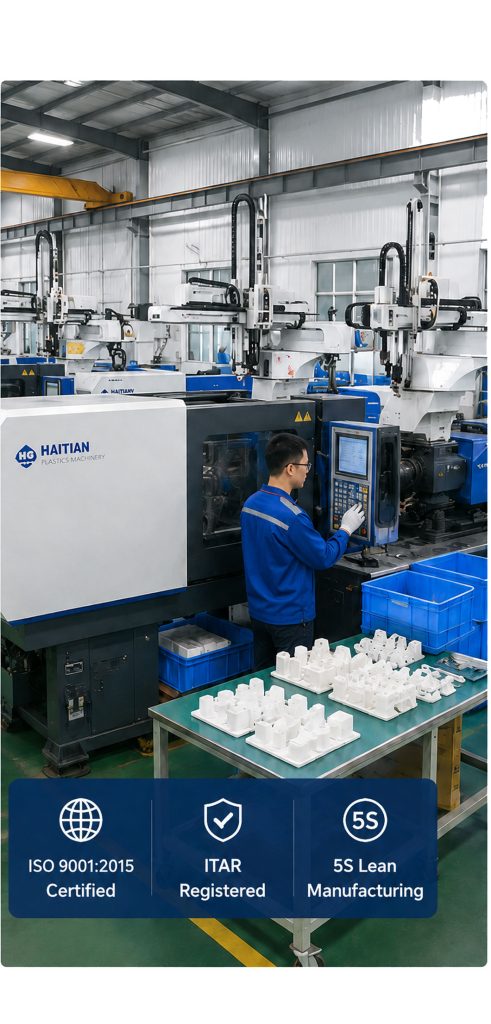
In a typical insert molding process, the injection molding machine is only one part of the overall production system. The full process usually includes insert feeding, orientation, placement, mold closing, injection, cooling, ejection, and inspection.

Automated Insert Placement
For high-volume production, inserts are commonly oriented using a vibration bowl or sorting device. A robot equipped with end-of-arm tooling then picks the inserts and places them into precise mold locations. Pre-positioning fixtures may be used to improve placement repeatability before the mold closes.
Once the insert is in the mold, it may be held by vacuum, mechanical retention, pins, or slides. At the same time, the previous molded part is ejected. This synchronized movement is important for cycle time control and production consistency.
Manual vs. Automated Loading
Manual insert placement is possible and may be suitable for low-volume production, pilot builds, or complex structures that are difficult to automate. However, manual operation increases cycle time, creates more variation, and raises the risk of missing or misaligned inserts.
Automated insert molding solutions are generally preferred for mass production because they reduce operator dependency, improve positioning accuracy, shorten cycle time, and support more stable quality control.
Vertical and Horizontal Injection Molding Machines
Vertical injection molding machines are widely used for insert molding because the mold face is oriented upward, making insert loading easier. Rotary tables, sliding tables, and tilting tables can further improve handling efficiency. Their open clamping structure also makes it easier to integrate automation devices.
Horizontal injection molding machines can also perform insert molding effectively, especially when supported by advanced robotics and fixture design. The machine choice should be based on part geometry, insert complexity, production volume, automation strategy, and total project economics.
Key Advantages and Engineering Limitations
Insert molding is not suitable for every component. Its value depends on whether material integration, assembly reduction, retention force, electrical function, or compact design can offset the higher tooling and process-control requirements.
| Aspect | Engineering Value | Design Consideration |
|---|---|---|
| Material integration | Combines plastic insulation and moldability with metal strength or conductivity. | Material compatibility and thermal expansion mismatch must be evaluated early. |
| Assembly reduction | Can reduce welding, riveting, fastening, and secondary assembly. | The mold and automation system must control insert position reliably. |
| Functional performance | Supports conductive, magnetic, thermal, fastening, or structural functions. | Electrical isolation, sealing reliability, and mechanical retention should be validated. |
| Design flexibility | Allows compact, multi-functional parts with complex geometry. | Overly complex insert geometry can increase tooling risk and cycle time. |

The main challenges include higher mold complexity, increased tooling cost, longer process development, more demanding quality control, and higher scrap cost when defects occur. Typical defects include missing inserts, insert movement, poor plastic filling, flash around the insert, sink marks, warpage, poor bonding, or exposed metal where insulation is required.
For this reason, insert molding should be treated as a design-for-manufacturing topic from the early product development stage, not as a simple molding conversion after the part design is already fixed.
Need DFM Support for an Insert Molded Part?
If your project involves metal inserts, threaded features, copper busbars, electrical terminals, or compact structural components, early moldability review can reduce tooling changes and production risk.
Contact DTG for DFM and Moldability SupportInsert Molding Design Guide: Practical DFM Points
A practical insert molding design guide should focus on three questions: Can the insert be placed repeatably? Can the plastic flow and pack around it without defects? Can the final part meet mechanical, electrical, and dimensional requirements across production conditions?
- Insert positioning: The insert must have clear locating features. Small tolerance errors can create functional failures, especially in connectors, threaded inserts, and high-voltage components.
- Retention design: Knurling, holes, undercuts, ribs, or mechanical locking features may improve pull-out resistance and torque resistance.
- Thermal expansion mismatch: Metal and plastic expand and shrink differently. Poor material selection or insufficient process control can cause internal stress, cracking, or warpage.
- Preheating and drying: Some inserts may require preheating or drying to reduce moisture, improve flow behavior, and reduce thermal shock.
- Gate and flow design: Resin flow should not push the insert out of position. Gate location, injection speed, holding pressure, and venting must be reviewed together.
- Inspection strategy: Missing inserts, wrong orientation, and positional deviation should be controlled through fixtures, sensors, visual inspection, or automated detection when production volume justifies it.
For projects requiring integrated metal and plastic structures, DTG provides insert injection molding service support from mold design and process evaluation through trial production and volume manufacturing.
Applications in Automotive, Electronics, Medical, and Aerospace Parts
New Energy Vehicles and High-Voltage Systems
Automotive electrification has increased the demand for compact, safe, and highly integrated electrical components. New energy vehicles require more connectors, busbars, power distribution components, battery management parts, motor control units, BDU modules, PDU modules, and inverter-related assemblies.
Insert molding helps insulate conductive components, reduce direct contact risk, improve layout compactness, and support high-voltage safety design. Molded plastic can also help hold metal elements in position and provide limited protection against vibration or impact.

Consumer and Industrial Electronics
In electronics, insert molding supports miniaturization, signal performance, connector reliability, switches, sensors, and antenna structures. A molded antenna, for example, can help reduce part thickness while maintaining functional integration.
Medical Devices
Medical applications may include device housings, knobs, surgical tools, dental instruments, tubing-related components, and electronic medical device parts. The process can support precision, assembly consistency, and integrated functionality, provided that material selection and process validation are handled carefully.
Aerospace and High-Reliability Components
Aerospace applications may include seat components, latch mechanisms, handles, user interface switches, sensors, and valves. These parts often require dimensional stability, reliable insert retention, and consistent mechanical performance.
For applications involving conductive inserts, terminals, or structural metal components, metal insert molding service can help integrate mechanical and electrical requirements into a manufacturable molded part.
Common Risks and Practical Solutions
| Risk | Possible Cause | Manufacturing Response |
|---|---|---|
| Insert shift | Poor locating design, excessive flow force, unstable loading. | Improve fixture design, adjust gate location, use mechanical or vacuum holding. |
| Warpage | Thermal expansion mismatch or uneven cooling. | Optimize material pairing, cooling layout, holding pressure, and insert preheating. |
| Missing insert | Manual loading error or feeding interruption. | Use automated feeding, sensor confirmation, and in-process inspection. |
| Poor encapsulation | Inadequate flow, venting issues, insufficient pressure. | Review gate design, venting, resin selection, and process window. |
| High scrap cost | The insert and molded plastic become one rejected assembly. | Strengthen upstream insert control and mold-process validation. |
DTG’s Approach to Insert Molding Solutions
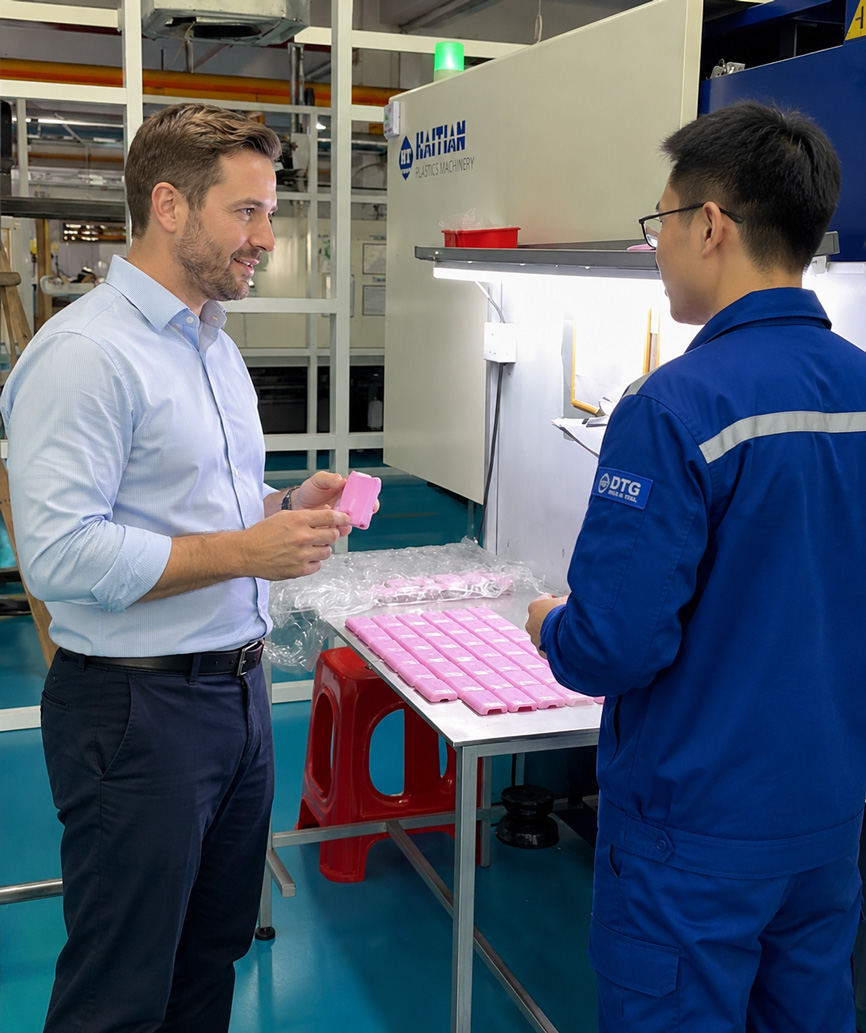
DTG TECH CO., LTD. provides mold manufacturing and injection molding support for insert molded products, from design evaluation and prototype validation to mold processing, mold trial, modification, and production delivery. The company’s work covers applications such as connectors, copper busbar inserts, high-voltage distribution components, BDU/PDU module parts, and integrated electrical structures for new energy vehicle systems.
In process development, DTG focuses on mold precision, insert positioning, automation feasibility, and quality control. Robotic loading systems and insert arranging devices can be used to reduce manual variation and improve production efficiency. For critical parts, process checks can help reduce risks such as missing inserts, positional deviation, and unstable encapsulation.
A related example is DTG’s handheld scanner housing insert injection molding project, where insert integration supports functional assembly and housing reliability.

Future Development of Insert Molding Technology
Insert molding is still developing as engineering plastics, conductive materials, automation systems, and intelligent inspection methods continue to improve. In new energy vehicles, smart manufacturing, electronics, and high-reliability industrial products, demand for high precision, high integration, and compact structure will continue to create more opportunities for this process.
Future development is likely to focus on more efficient automation, improved sustainability, broader use of engineering resins, smarter insert feeding and detection systems, and better control of process repeatability. As tooling strategies and automation costs become more optimized, insert molding may become practical for a wider range of industrial components.
For engineering teams, the key is not simply asking whether insert molding can be used. The better question is whether the part design, material combination, insert geometry, mold structure, inspection plan, and production volume make the process technically and economically appropriate.
Discuss Your Insert Molding Project with DTG
If you are evaluating insert molding technology for an automotive, electronics, medical, or industrial component, DTG can review your part structure, insert design, material requirements, and manufacturability risks before tooling begins.
Request a Quote or Engineering Review