How to Customize Clear PET Cosmetic Jars and Organizer Boxes
Developing custom clear PET containers involves more than selecting a shape and adding a logo. For cosmetic jars and organizer boxes, material selection, wall thickness, mold design, transparency, assembly features, and quality requirements all influence the final product. At DTG, we support customers through design evaluation, mold development, prototyping, injection molding, and production planning. This guide explains the key decisions purchasing managers and product development teams should make before committing to tooling.
1. Define the Purpose of Your PET Container
The first step in PET packaging customization is establishing what the container must do. A cosmetic jar holding a cream has different functional requirements from a clear organizer box used for brushes, accessories, or small components.
Before starting product design, clarify:
- Application: Will the container hold cosmetic formulations, dry products, or general accessories?
- Contents: Will the packaging contact liquids, oils, alcohol-containing formulations, powders, or solid items?
- Use conditions: Will it experience repeated opening, transportation, elevated temperatures, or prolonged light exposure?
- Appearance: Is colorless transparency required, or will the design use a transparent tint?
- Functional requirements: Does the product need a sealing liner, removable lid, snap-fit closure, or internal compartments?
These decisions affect the material grade, manufacturing method, dimensional tolerances, and validation plan. For a cosmetic container, compatibility with the actual formulation should be considered from the beginning rather than after the mold has been manufactured.
2. Choose the Shape, Capacity, and Dimensions
For custom PET cosmetic jars, dimensions determine not only the visual proportions but also usable capacity, closure fit, filling operations, and shipping efficiency. For clear PET organizer boxes, internal space and the arrangement of compartments are often equally important.
Cosmetic Jar Dimensions
Typical design inputs include the jar’s outside diameter, overall height, internal depth, nominal capacity, opening diameter, and lid interface. Nominal capacity should be distinguished from brimful capacity, particularly when filling equipment requires headspace.
A threaded closure requires additional attention to thread geometry, engagement, and sealing surfaces. These features should be evaluated as a complete assembly rather than as separate parts.
Organizer Box Dimensions
For organizer boxes, define the outside length, width, and height alongside the usable interior dimensions. Internal ribs, dividers, hinges, and lid overlaps reduce available storage space.
If the container must fit inside retail cartons, shipping trays, drawers, or an existing product assembly, those space constraints should be incorporated into the initial drawing.
| Design Item | Cosmetic Jar | Organizer Box |
|---|---|---|
| Primary dimensions | Diameter, height, capacity | Length, width, height, internal volume |
| Closure | Threaded or snap-on lid | Removable or snap-fit cover |
| Critical function | Closure fit and sealing reliability | Compartment fit and access |
| Key validation | Capacity, leakage, repeated opening | Dimensional fit, lid retention, stacking |
Our engineering team can review these requirements during the design evaluation stage to identify dimensional conflicts before tooling begins.
3. Select the PET Grade and Define Appearance Requirements
PET, or polyethylene terephthalate, is a thermoplastic polyester widely used in transparent packaging. It offers good clarity when the material grade, part geometry, and processing conditions are suitable.
However, specifying “clear PET” is not enough for a custom injection molded product. The resin grade must be appropriate for the manufacturing process and the intended application.
Transparency, Gloss, and Color
Transparency depends on more than resin selection. Mold surface finish, moisture control, wall thickness, gate design, and cooling conditions can influence haze, flow marks, and overall appearance.
PET is a semicrystalline polymer. If cooling conditions allow excessive crystallization in a part intended to remain transparent, visible cloudiness or whitening may develop. This risk becomes especially important around thick sections, localized hot spots, and gates.
For appearance-sensitive products, we recommend approving a physical sample under agreed inspection conditions, including lighting, viewing distance, and acceptable cosmetic defects.
PET Versus PETG
PETG is a modified polyester that generally offers greater processing flexibility for certain transparent and complex shapes. However, the relative impact resistance, chemical compatibility, cost, and achievable clarity depend on the specific grades and manufacturing methods.
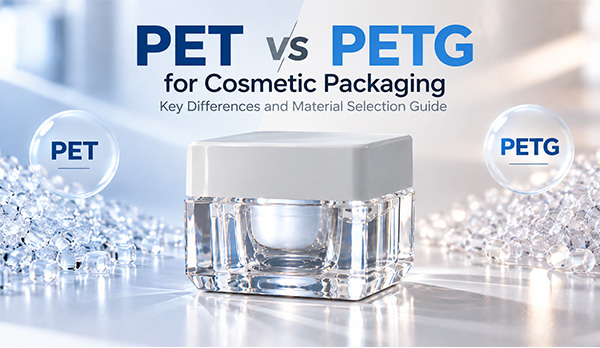
If the proposed container has thick walls, complex geometry, or demanding appearance requirements, the material decision should be reviewed before the mold design is finalized. Our related guide on PET vs. PETG for cosmetic packaging explains the main selection considerations.
Material Compliance and Product Contact
For packaging that directly contacts a cosmetic formulation, the purchasing specification should identify the intended market and applicable regulatory requirements. A resin described as food-contact suitable is not automatically approved for every cosmetic formulation or finished packaging application. Material documentation and finished-package compatibility testing should be assessed separately.
4. Design the Container for Injection Molding
A successful custom plastic container design must balance appearance, function, and manufacturability. Features that look straightforward in a 3D model may introduce tooling complexity or inconsistent molding results.
At DTG, design evaluation is part of our mold development process. Our engineering team reviews the product geometry and production requirements before proceeding with mold manufacturing.
Wall Thickness and Transitions
Consistent wall thickness helps reduce uneven shrinkage, sink marks, and cooling differences. Thick sections can be particularly challenging in transparent PET because they retain heat longer and may develop haze.
Rounded corners and gradual transitions can improve melt flow and reduce localized stress. Where additional stiffness is needed, ribs may be considered instead of simply increasing the thickness of the entire wall.
Draft Angles and Demolding
Draft angles help the molded container release from the tool. Their requirements depend on surface finish, wall height, part geometry, and material behavior. Insufficient draft can increase ejection force and the risk of scuffing or distortion.
Gates, Parting Lines, and Ejector Marks
Transparent parts make manufacturing marks more visible. Gate vestiges, parting lines, and ejector impressions should therefore be considered during product design rather than treated as unexpected defects after sampling.
For example, a gate positioned on a prominent cosmetic surface may affect the appearance even when the container is dimensionally acceptable. Gate location also influences filling behavior and local cooling.
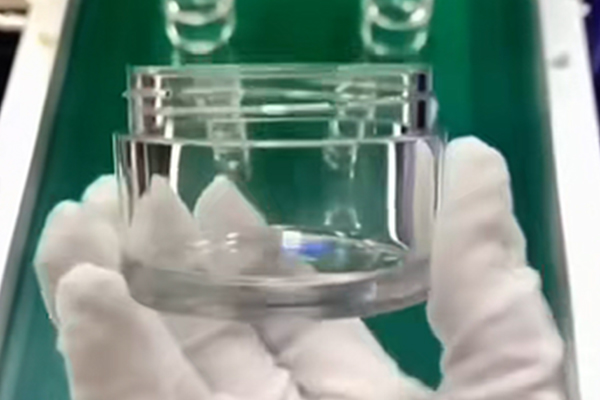
Visual inspection of trial parts helps confirm whether gate placement, parting lines, and surface appearance meet the agreed design requirements.
Lids, Snap-Fits, and Internal Features
Snap-fit features must provide sufficient retention without excessive assembly force or cracking. Threaded lids require controlled mating geometry, while internal dividers must allow reliable filling and ejection.
Complex undercuts may require slides or other tooling mechanisms, which can increase mold cost, maintenance requirements, and production cycle time. These trade-offs should be understood before approving the final design.
5. Develop the Mold and Approve Trial Samples
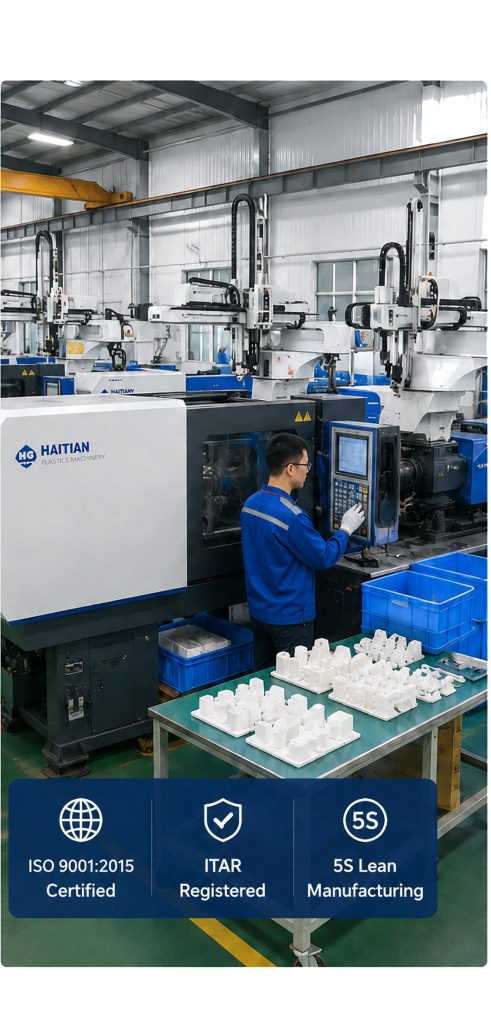
Once the container design and material requirements are defined, the project moves into mold development. At DTG, our service scope includes mold design, mold manufacturing, trial molding, sample approval, and modifications based on customer feedback.
- Design submission: The customer provides 3D models, drawings, samples, or a detailed product specification.
- Engineering review: We evaluate manufacturability, critical dimensions, material requirements, and mold-related design risks.
- Mold design and processing: Tooling is developed for the approved product geometry and expected production requirements.
- Mold trial: Initial samples are produced to assess dimensional accuracy, transparency, filling behavior, and visible defects.
- Feedback and modification: Required changes are reviewed, implemented where agreed, and verified through further sampling.
- Sample approval: The approved sample and associated specifications become the reference for production preparation.
Why PET Mold Cooling Deserves Special Attention
Clear PET injection molding requires careful control of heat removal. Poor cooling distribution can produce localized haze, dimensional variation, or unstable demolding. The gate region is particularly sensitive because it may remain hot after surrounding areas have begun to solidify.
Material drying is another important consideration. PET absorbs moisture, and inadequate drying before processing can contribute to hydrolytic degradation and appearance defects such as splay or silver streaking.
Cooling should not simply be made as aggressive as possible. Excessive temperature differences can contribute to residual stress, while a cold mold exposed to humid air may develop condensation. The appropriate processing window must be established for the selected grade, mold design, and production environment.
These factors are evaluated during process development rather than by applying one universal temperature setting to every PET product.
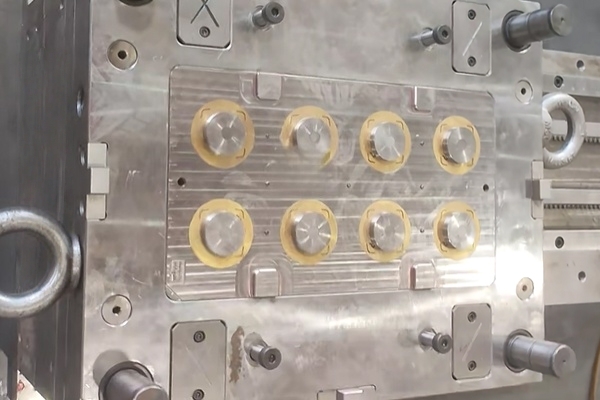
Mold trials provide an opportunity to evaluate cooling performance, appearance consistency, and part release before production approval.
For additional context on tooling decisions and project preparation, see our guide to PET mold development and mass production.
6. Plan Decoration, Assembly, and Packaging
The molded container is not always the final deliverable. Depending on the project, the finished product may require a logo, label, separate lid, liner, insert, or protective packaging.
Common decoration options to evaluate include adhesive labels, screen printing, and other surface treatments compatible with the selected resin and product geometry. Not every decoration method is suitable for every PET grade or shape, so feasibility and supplier scope should be confirmed during quotation.
For assemblies, the purchasing specification should identify which components are included and whether the supplier is responsible for assembly, functional checks, or final packing.
Clear surfaces can reveal scratches and handling marks more readily than opaque plastics. Protective separators, individual bags, or other packaging methods may be appropriate depending on the surface requirements and shipping conditions.
Our team can discuss the required delivery configuration during project evaluation, including which post-molding operations are included in the proposed manufacturing scope.
7. Prepare for Consistent Mass Production
For purchasing managers, an approved sample is only one milestone. A reliable supply arrangement also requires agreed acceptance criteria, production quantities, inspection responsibilities, and delivery expectations.
DTG supports both smaller and larger production requirements, with project planning based on the agreed product design and order needs. Before mass production, we recommend confirming the following items.
| Control Area | What Buyers Should Confirm |
|---|---|
| Approved design | Drawing revision, 3D model, material grade, and approved sample |
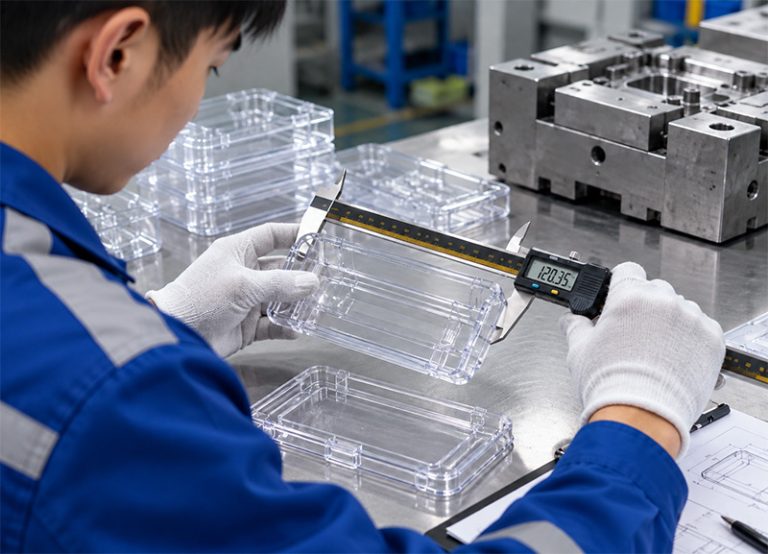
| Dimensional quality | Critical dimensions, tolerances, measurement methods, and sampling plan |
| Visual quality | Acceptable haze, color variation, scratches, gate marks, and surface defects |
| Assembly performance | Lid fit, snap retention, sealing tests, and repeated-use requirements |
| Supply planning | Forecast quantities, lead times, packaging specifications, and delivery method |
| Change management | Revision approval, mold modification records, and sample requalification |
Our project process includes design evaluation, mold processing updates, trial samples, customer feedback, and approval before delivery. Specific inspection plans and acceptance criteria should be agreed for each project rather than assumed from a general product description.
A supplier evaluation should also consider tooling ownership arrangements, maintenance responsibilities, repeat-order consistency, and how engineering changes will be communicated. These issues can affect long-term cost and supply continuity as much as the initial unit price.
8. Common Customization Mistakes to Avoid
Several preventable issues can increase tooling revisions, sampling time, or production risk.
| Common Mistake | Potential Consequence | Recommended Action |
|---|---|---|
| Undefined dimensions or capacity | Fit or filling problems | Specify critical dimensions and capacity definitions |
| Ignoring lid and snap-fit requirements | Poor retention or difficult assembly | Validate mating parts together |
| Prioritizing appearance alone | Functional or chemical compatibility failures | Test samples under actual use conditions |
| Uncontrolled design changes | Tooling rework and inconsistent specifications | Use formal drawing revisions and written approvals |
| Assuming all PET grades process alike | Haze, unstable molding, or unexpected cost | Confirm grade-specific data and trial requirements |
9. FAQ: Custom Clear PET Containers
Can I customize PET containers from an existing sample?
Yes. A physical sample can be a useful starting point for defining dimensions, shape, surface appearance, and assembly requirements. However, a sample alone may not reveal the original material grade, internal tolerances, or tooling details. Additional measurements and design confirmation may be required before a mold quotation is finalized.
Can a supplier help review my product design?
Yes. DTG provides design evaluation as part of our mold and injection molding services. We can review the submitted geometry and manufacturing requirements to discuss moldability, material selection considerations, and features that may require adjustment before tooling.
How do I prepare for a custom mold quotation?
Provide a 3D CAD file if available, a dimensioned drawing, material preference, estimated order volume, appearance requirements, and any critical assembly or sealing criteria. Product photographs or reference samples can help clarify the intended design. A complete specification supports a more meaningful assessment of tooling complexity and production cost.
What should be confirmed before mass production?
Confirm the approved material grade, product drawing revision, reference samples, critical tolerances, visual acceptance criteria, assembly tests, packing method, and delivery requirements. Any mold changes after sample approval should be documented and evaluated for their effect on product performance.
Is injection molding suitable for every clear PET bottle or jar?
No. Injection molding is suitable for many rigid jars, boxes, lids, and components, but lightweight hollow bottles are often manufactured through injection stretch blow molding or other blow molding processes. The appropriate method depends on the container geometry, wall thickness, capacity, and production requirements.
10. From Design Requirements to a Manufacturable PET Container
Developing custom clear PET containers is most effective when the product specification, material choice, mold design, and quality criteria are considered together. A clear organizer box may prioritize dimensional consistency and scratch resistance, while a cosmetic jar may require more extensive closure and formulation compatibility validation.
At DTG, we provide mold manufacturing and injection molding support from design evaluation through sampling and production. Our custom PET cosmetic packaging and clear organizer boxes page provides additional context for these product categories.
For a new project, the most useful starting point is a clear set of requirements: intended use, drawings or samples, material expectations, annual demand, appearance standards, and critical functional features.
Discuss Your PET Container Design with DTG
If you are developing a custom cosmetic jar or transparent organizer box, our engineering team can review your drawings, reference samples, and production requirements to discuss material considerations, moldability, and the next steps for quotation.