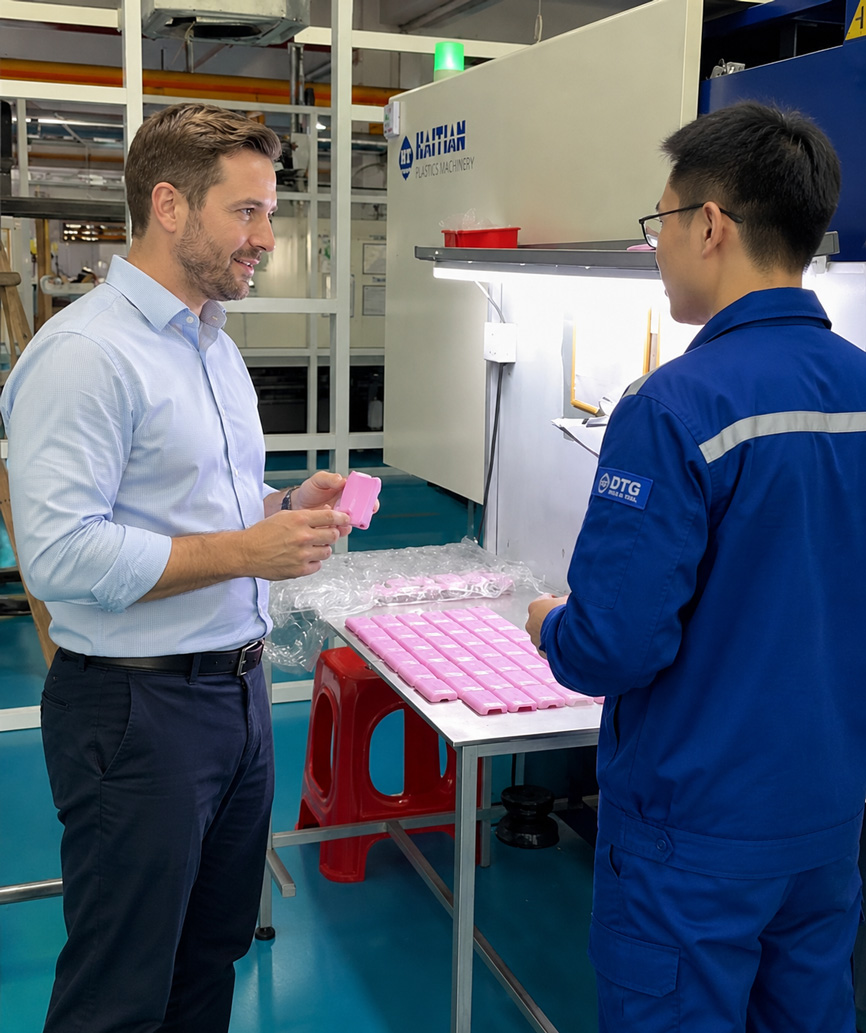
Custom PET Cosmetic Packaging and Clear Organizer Boxes | DTG
Custom PET Cosmetic Packaging and Clear Organizer Boxes
Custom PET cosmetic packaging gives beauty brands and product manufacturers flexibility in container shape, dimensions, appearance, and functional design. From transparent cosmetic jars to compartmentalized storage boxes, a well-designed PET product must balance visual presentation with practical manufacturing and everyday use requirements.
At DTG TECH CO., LTD., we support custom plastic product development through design evaluation, mold manufacturing, prototyping, and injection molding. Customers can provide drawings, product samples, or design requirements for engineering review and quotation.
This page introduces the customization possibilities for PET cosmetic containers and clear organizer boxes, along with the material considerations, manufacturing steps, and purchasing information needed to move a project toward production.
1. Custom PET Packaging and Organizer Products
PET, or polyethylene terephthalate, is used in various packaging applications where appearance, dimensional requirements, and material performance are important. Depending on the product design and selected resin grade, PET can be considered for injection molded transparent containers and packaging components.
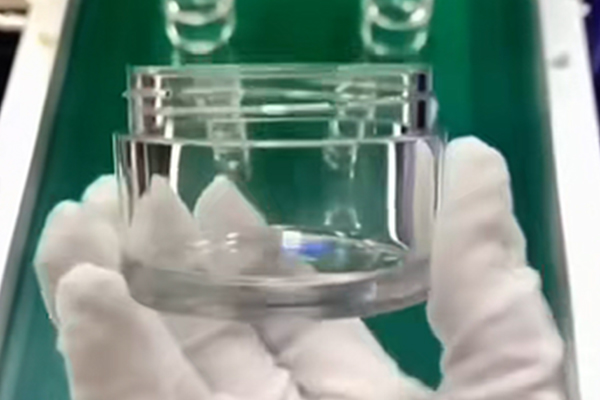
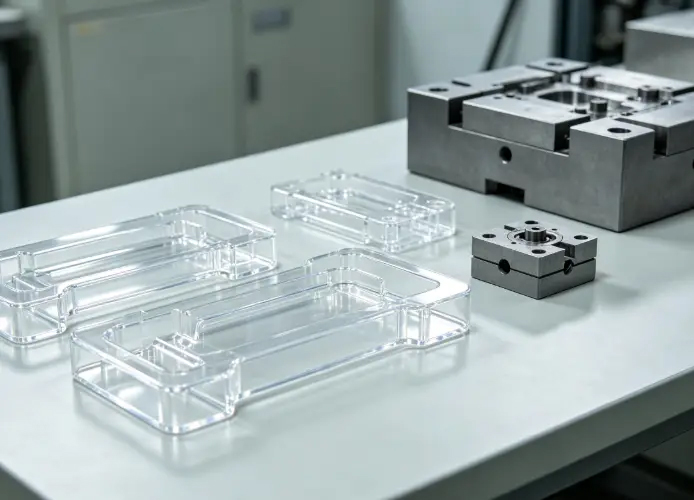
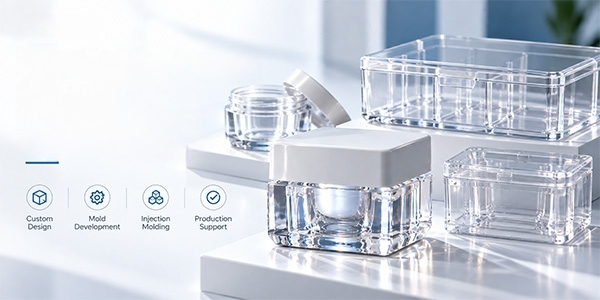
Product geometry, wall thickness, closure structure, and transparency requirements influence whether a proposed design is suitable for PET injection molding. Each custom product should be evaluated before the final material and mold construction are confirmed.
2. Cosmetic Packaging Design and Customization Options
Cosmetic packaging must support both the product inside and the brand identity presented to the customer. When developing custom PET containers, we recommend reviewing structural and visual requirements together.
Shapes, Dimensions, and Capacity
A custom container may use a round, square, rectangular, or application-specific profile. Dimensions should reflect the required filling volume, storage conditions, labeling area, and compatibility with secondary packaging.
Nominal capacity and usable fill capacity are not necessarily identical. Buyers should define the required fill level, headspace, and any dimensional restrictions from filling or assembly equipment.
Jar Bodies and Lid Structures
Depending on the design, closures may use threaded engagement, snap-fit features, or other mechanical connections. The correct solution depends on how the container is filled, opened, transported, and used.
Critical dimensions include opening diameter, thread geometry, lid engagement, and sealing contact surfaces. Where leakage resistance is required, the complete container-and-closure assembly must be tested under the intended conditions.
Logo, Decoration, and Brand Appearance
Visual customization may include color selection, molded-in branding features, labels, or printing. The feasibility of decoration depends on the container geometry, surface finish, material grade, and selected finishing process.
If printing, labeling, assembly, or other secondary operations are required, they should be included in the project specification so their feasibility and scope can be evaluated before quotation.
3. Clear PET Organizer Boxes: Structure and Function
Clear plastic organizer boxes are used to store, separate, and display smaller items. Their transparency helps users identify the contents without opening the container, while the internal structure determines how effectively items are organized.
Dimensions and Compartment Layouts
The starting point for an organizer box is the size and quantity of the items it must hold. Buyers should provide the dimensions of representative contents, the preferred orientation, and any clearance needed for convenient removal.
Internal dividers may be integrated into the molded structure or designed as separate components, depending on tooling feasibility, assembly needs, and the desired flexibility of the layout.
Lids, Stacking, and Handling Features
The box design may incorporate fitted lids, grip areas, locating features, or stacking structures. These features should be reviewed for dimensional fit, load conditions, and repeated-use requirements.
For example, a box intended to be stacked during shipping may need different support features from one intended only for desktop organization. A lid that is opened frequently may also require additional evaluation of its retention and durability.
Appearance and Transparency
Visible haze, flow marks, gate whitening, scratches, and warpage can affect the appearance of transparent storage products. These requirements should be defined during design review, with representative samples used to establish acceptable results.
4. PET Material Selection for Cosmetic Containers
PET is valued for its potential optical clarity and its established use in packaging applications. However, not every PET resin grade is suitable for every injection molded container design.
PET is a semicrystalline polyester. For transparent injection molded parts, cooling behavior is particularly important because crystallization can reduce clarity. Thick sections, uneven wall thickness, and localized heat accumulation can create additional molding challenges.
Material selection should consider the product’s intended contents, appearance requirements, mechanical loads, temperature exposure, and expected service life.
| Selection Factor | What Buyers Should Confirm |
|---|---|
| Optical appearance | Required transparency, haze limits, color, and acceptable surface marks |
| Mechanical performance | Impact exposure, stacking loads, lid engagement, and handling conditions |
| Chemical compatibility | Actual cosmetic formulation, fragrances, alcohol content, and cleaning agents |
| Temperature exposure | Filling, storage, transport, and intended-use temperature conditions |
| Regulatory requirements | Applicable market, end-use, material declarations, and required supporting documentation |
PETG and other transparent plastics may also be considered for some products. PETG can offer processing advantages for certain thick-wall transparent designs, but material cost and chemical compatibility must be assessed for the actual application.
For a more detailed comparison, see our guide to PET vs. PETG for cosmetic packaging. Final material decisions should rely on the selected resin’s technical data and application-specific testing, rather than general material descriptions alone.
5. Custom Manufacturing: From Drawing to Molded Product
As a custom plastic manufacturing supplier, DTG supports projects that begin with a drawing, a reference sample, or an initial product concept. The scope of engineering work depends on how fully the product requirements have been defined.
Product Evaluation and DFM
Our engineering review considers wall thickness, draft angles, parting lines, gate placement, demolding, and critical assembly dimensions. For clear PET parts, cooling layout and surface appearance also require attention.
A design that looks acceptable in a rendering may still require modifications to improve moldability or reduce visible defects. We discuss relevant engineering considerations before mold processing proceeds.
Mold Development and Trial Samples
After the product design is approved, the mold can be designed, processed, assembled, and tested. Initial samples are reviewed for dimensions, appearance, and functional fit. If changes are needed, tooling modifications and additional trials can be planned.
PET processing requires attention to resin drying, gate behavior, cooling uniformity, and venting. Poor cooling around a gate or thick section may contribute to whitening or haze. Moisture-related processing problems may produce surface streaks or other defects.
Processing temperatures and cooling settings must be established using the selected PET grade, actual mold design, and trial results. Universal settings are not appropriate for every container geometry.
Approval and Production Preparation
Once trial samples meet the agreed requirements, the buyer can approve the product specification and reference samples. Production planning then addresses order quantity, material availability, inspection requirements, packaging, and delivery arrangements.
To understand the complete development workflow, read From PET Mold Development to Mass Production: What Buyers Should Know.
6. Low-Volume Orders and Mass Production
Custom PET projects may begin with prototype evaluation, an initial production order, or an established recurring demand. The expected quantity affects tooling decisions, unit cost, scheduling, and the overall manufacturing approach.
For a new product, the buyer may first need samples to validate dimensions, appearance, and assembly. For a mature product, the priority may be repeatability, production capacity, and consistent supply.
| Project Stage | Primary Objective | Key Considerations |
|---|---|---|
| Prototype or sample development | Evaluate design and fit | Material, dimensions, appearance, and test requirements |
| Initial production order | Confirm manufacturability and supply requirements | Tooling readiness, approved samples, quality criteria, and packaging |
| Recurring mass production | Maintain repeatable quality and supply | Production forecasts, mold maintenance, process consistency, and delivery planning |
A higher production volume may justify different tooling arrangements from a limited-run project. Cavity count, mold construction, and cycle-time considerations should be evaluated against the expected demand.
DTG supports different production quantities, but minimum order quantity, tooling cost, unit price, and lead time are determined by the specific project. We do not apply a universal quantity or delivery commitment to every custom PET product.
7. Quality Requirements and Delivery Planning
For transparent cosmetic packaging and organizer boxes, quality evaluation should cover more than overall shape. Appearance, dimensions, lid fit, and handling performance can all affect product acceptance.
Typical Inspection Points
- Visual appearance: Check for unexpected haze, whitening, scratches, bubbles, flow marks, and contamination.
- Dimensions: Measure critical features against approved drawings and tolerances.
- Closure fit: Verify lid engagement, opening and closing performance, and sealing where required.
- Structural condition: Inspect for cracks, deformation, excessive flash, or damage during demolding.
- Assembly and packaging: Confirm component matching, product count, and protection during handling and shipment.
Acceptance limits should be agreed before production. For example, a visible gate mark may be acceptable in a concealed area but unsuitable on a prominent display surface. Reference samples and documented inspection criteria can reduce subjective disagreements.
Delivery planning should also cover packaging format, carton quantities, labeling, shipment destination, and any handling restrictions. Transparent parts may need suitable protection against rubbing and scratches during transport.
Customers should confirm their required documentation, inspection arrangements, and shipping terms during quotation so these requirements can be considered in the manufacturing plan.
8. How to Request a Custom PET Product Quote
A detailed inquiry helps our team evaluate manufacturing feasibility and prepare a quotation aligned with the intended application.
For custom PET cosmetic packaging or clear plastic organizer boxes, please provide as much of the following information as possible:
- Product reference: 2D drawings, 3D CAD files, photographs, or a physical sample.
- Dimensions and capacity: Overall size, wall thickness, required volume, and critical tolerances.
- Material requirements: Preferred PET grade, color, transparency, and any relevant compliance requirements.
- Functional requirements: Lid design, stacking, compartments, assembly fit, or sealing performance.
- Appearance and decoration: Surface finish, branding, labels, or printing requirements.
- Order information: Estimated quantity per order, annual forecast, and expected order frequency.
- Tooling status: Whether a suitable existing mold is available or new mold development is required.
- Delivery details: Destination, packaging requirements, and target schedule.
If some specifications are not yet finalized, indicate which requirements are fixed and which are open to engineering discussion. This allows us to identify the information needed for the next development step.
9. Frequently Asked Questions
Can PET cosmetic packaging be customized?
Yes. PET cosmetic packaging can be developed with customized shapes, dimensions, colors, structural features, and suitable decoration options. The final design must be reviewed for material compatibility, tooling feasibility, and production requirements.
Can DTG produce clear organizer boxes?
DTG provides custom mold development and injection molding services for plastic container projects, including clear organizer box designs. We can evaluate box dimensions, lids, partitions, and other structural requirements using customer drawings or reference samples.
Can I start with a product drawing or sample?
Yes. A drawing, CAD model, or physical reference sample can be used as the starting point for a technical review. Additional dimensions, material details, and performance requirements may be needed before mold manufacturing begins.
Can mold making and product manufacturing be handled together?
Yes. DTG’s service scope includes mold design, mold manufacturing, trial samples, and injection molding. Coordinating these stages can help maintain continuity between the approved design and subsequent production.
Is PET suitable for all cosmetic formulations?
No material should be assumed compatible with every cosmetic formulation. Fragrances, solvents, oils, and other ingredients can affect packaging performance. Compatibility testing using the actual formulation and proposed container assembly is recommended before final approval.
What determines the minimum order quantity?
Minimum order quantity depends on the product design, tooling arrangement, resin requirements, production setup, and any decoration or packaging operations. MOQ and pricing are confirmed after the project requirements are reviewed.
10. Develop Your Custom PET Packaging Project with DTG
Custom PET cosmetic jars and organizer boxes require coordination between product design, material selection, mold construction, sample approval, and manufacturing. Addressing these requirements early helps reduce unnecessary design changes and makes purchasing decisions more predictable.
At DTG, we work with customers to evaluate custom plastic product requirements and plan the appropriate tooling and injection molding approach. Whether your project involves a new cosmetic jar, a transparent storage box, or a revised container design, the first step is a clear technical discussion.
Our related services include custom mold development, prototype manufacturing, and plastic injection molding. The appropriate combination depends on the current stage of your project and your intended production requirements.
Request a Quote for Custom PET Cosmetic Packaging
Share your product drawings, reference samples, dimensions, expected order quantity, and appearance requirements with DTG. Our team can review the information and discuss design feasibility, mold development, sample preparation, and production options.
Ready To Start Your Project?
Tell us about your part, material, quantity, or mold requirements. Our team will review your project and provide a practical manufacturing solution.