Custom PET Injection Molds for Cosmetic Packaging and Containers
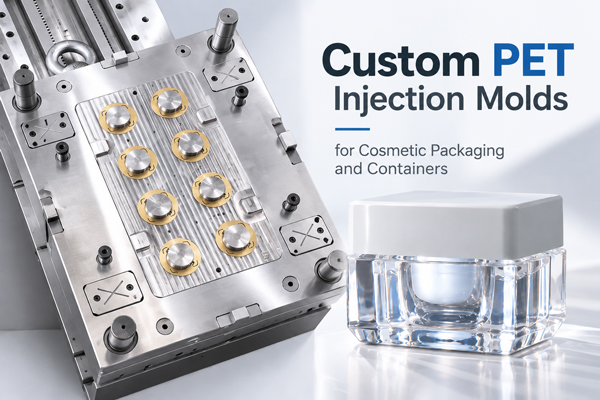
Custom PET tooling and clear cosmetic packaging application. Replace the image URL with the uploaded product image URL.
Cosmetic Packaging & Clear Container Tooling
Custom PET Injection Molds for Cosmetic Packaging and Containers
For cosmetic jars, transparent organizer boxes, and rigid packaging containers, product appearance is only one part of the manufacturing requirement. Buyers also need consistent dimensions, dependable closure fit, acceptable surface quality, and repeatable output across production batches. Developing custom PET injection molds requires these expectations to be considered before tooling begins.
DTG TECH CO., LTD. supports customers from product requirement review and mold design through tool manufacturing, trial samples, and production preparation.
Discuss Your PET Mold Project →Project Overview
Custom PET Mold Development from Design to Production
DTG provides custom PET mold making and injection molding support for packaging projects requiring application-specific geometry, controlled dimensions, and defined surface appearance. Our engineering workflow connects product design review, mold structure evaluation, manufacturing, trial molding, and sample approval.
Rather than selecting a standard mold configuration without considering the application, we evaluate the product’s geometry, material requirements, expected production volume, and quality criteria. This helps customers make informed tooling decisions before committing to manufacturing.
Mold structures developed around product geometry and functional requirements.
Early assessment of wall thickness, gate location, draft, and molding risks.
Tool testing and customer feedback before production release.
Tooling and molding requirements considered together for subsequent orders.
Custom PET Molds for Different Product Applications
Different packaging products place different demands on mold design. PET container molds must account for part shape, visibility requirements, wall thickness, functional features, and the intended manufacturing process.


Explore a related application: Custom PET Cosmetic Packaging and Clear Organizer Boxes.
What Makes a PET Injection Mold Custom-Built?
A custom mold is engineered for a defined product rather than adapted solely from a generic tooling layout. Several design variables determine its structure, manufacturing cost, and suitability for repeat production.
| Design Factor | Engineering Consideration | Impact on the Project |
|---|---|---|
| Product Geometry | Shape, dimensions, wall thickness, ribs, threads, and closure features. | Influences cavity design, mold actions, ejection, and dimensional control. |
| Cavity Configuration | Single-cavity or multi-cavity layout based on part size and demand. | Affects tooling investment, output per cycle, and production economics. |
| Surface Requirements | Clarity, gloss, texture, and acceptable cosmetic defects. | Determines polishing requirements and visible-surface inspection criteria. |
| Dimensional Tolerances | Critical dimensions, mating interfaces, and functional fit. | Guides tooling precision and sample inspection requirements. |
| Production Volume | Annual demand, expected mold life, and future capacity. | Supports decisions on mold steel, cavity count, maintenance, and long-term cost. |
The final mold configuration is confirmed after reviewing the customer’s drawings, material specification, production targets, and applicable quality requirements.
Product Development and Mold Design Support
Successful mold development starts with a clear understanding of the part and how it will be used. DTG can begin a project review using CAD drawings, physical samples, or a preliminary product concept.
Design for Manufacturability (DFM)
During DFM review, engineers evaluate features that may influence mold construction, filling behavior, part release, and dimensional repeatability.
- Wall thickness distribution and transitions between thick and thin sections.
- Gate type, location, and the visibility of gate marks.
- Draft angles, undercuts, parting lines, and ejection methods.
- Cooling channel arrangement and potential temperature imbalance.
- Dimensional tolerances, mating features, and surface finish requirements.
Design Confirmation and Revision Control
Proposed modifications should be reviewed with the customer before mold manufacturing. Changes to product geometry, critical dimensions, or surface requirements can affect tooling components and project timing. Using agreed drawing revisions and approval records helps keep engineering and purchasing teams aligned.

图片占位符 4:PET 模具 3D CAD 设计截图或 DFM 分析图,建议展示浇口、冷却水路、模具型腔和产品结构。
3D CAD model, 2D drawings, PET grade, appearance specifications, expected annual quantity, and any critical assembly dimensions.
Technical Considerations
Common PET Molding Issues and Engineering Solutions
Clear PET molding requires careful control of material preparation, heat transfer, gate design, and molding conditions. PET is a semi-crystalline polymer, and its cooling behavior can influence transparency, shrinkage, and internal stress.
The following table summarizes common manufacturing concerns and engineering approaches considered during mold development and trial production.
| Production Issue | Possible Cause | Recommended Engineering Approach |
|---|---|---|
| Gate Whitening | Localized heat accumulation, shear effects, or crystallization near the gate. | Review gate geometry, melt delivery, localized cooling, and staged injection speed during trials. |
| Haze or Cloudiness | Excessive crystallization caused by unsuitable cooling conditions or thick sections. | Evaluate wall thickness, resin grade, mold temperature distribution, and cooling capacity. |
| Silver Streaks or Bubbles | Residual moisture, resin degradation, or entrapped gas. | Verify resin drying, material handling, melt residence conditions, and mold venting. |
| Warpage or Dimensional Variation | Uneven cooling, nonuniform wall thickness, or residual stress. | Improve cooling balance, evaluate packing conditions, and check critical dimensions on trial samples. |
| Flow Marks or Visible Weld Lines | Flow-front interaction, gate positioning, or inappropriate filling conditions. | Review melt flow paths, gate location, filling profile, and surface appearance requirements. |
| Flash or Poor Closure Fit | Parting-line mismatch, tooling wear, pressure imbalance, or dimensional variation. | Review mold alignment, shut-off surfaces, cavity dimensions, and functional assembly during sample validation. |
There is no single mold temperature or cooling setting suitable for every PET component. Resin formulation, part thickness, mold construction, equipment capacity, and ambient humidity can change the processing window. Excessive local heat may contribute to haze, while unsuitable cooling or condensation may introduce stress or surface defects. Final settings should be established through controlled mold trials and part inspection.
Mold Manufacturing and Trial Production
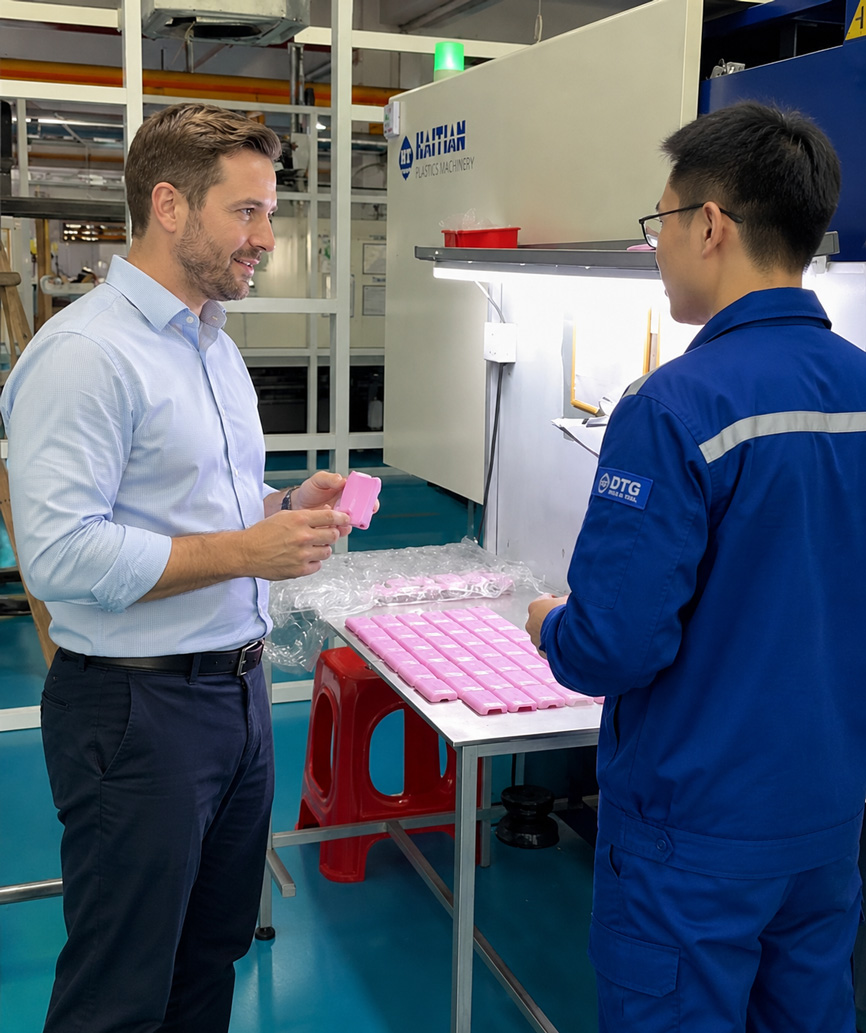
Once the mold design is approved, manufacturing proceeds according to the agreed tooling specification. The objective is to produce a mold that can be tested against the customer’s dimensional, cosmetic, and functional requirements before production release.
Tool Manufacturing
Machine mold components, prepare cavities and cores, and assemble the approved tooling structure.
Initial Mold Trial
Conduct trial molding to assess filling, cooling, ejection, and initial part quality.
Sample Evaluation
Review critical dimensions, visual appearance, and relevant functional or assembly features.
Adjustment and Approval
Implement agreed corrections, conduct further trials where necessary, and obtain customer sample approval.
Trial results may require adjustments to the mold or molding parameters. The number of trials depends on product complexity, tooling performance, and the acceptance criteria agreed for the project.
From Custom Mold Development to Production
Mold approval is an important milestone, but production planning should begin earlier. For customers who require both tooling and molded components, DTG can coordinate the transition from approved trial samples to manufacturing orders.
Material and Production Planning
The specified PET grade, material availability, batch quantity, molding equipment, and expected order frequency are reviewed before production scheduling. Material selection should reflect the required appearance, processing behavior, and applicable end-use requirements.
Quality Inspection
Inspection requirements should be agreed before production. Depending on the product, these may include dimensional measurements, surface appearance checks, fit testing, and monitoring of molding consistency.
Repeat Orders and Capacity
Expected order volumes help determine whether the selected cavity count and mold configuration provide an appropriate balance between initial tooling cost and ongoing unit cost. Capacity requirements can be reviewed again as demand changes.
Packaging and Delivery
Finished components and tooling require suitable handling and packaging to reduce the risk of surface damage or transport-related issues. Shipment arrangements, documentation, and delivery requirements should be confirmed during order planning.
The lowest initial mold price does not necessarily produce the lowest overall project cost. Tool life, maintenance requirements, cycle time, scrap rate, inspection effort, and expected production quantity all influence long-term manufacturing economics.
How to Choose the Right PET Mold Solution
For OEM engineers and purchasing teams, selecting a mold requires balancing product requirements, production expectations, and available investment. A structured evaluation helps avoid unnecessary tooling complexity while protecting critical quality requirements.
| Buyer Consideration | Recommended Evaluation |
|---|---|
| Expected Production Quantity | Estimate annual demand and total project volume before deciding on cavity count and tooling durability. |
| Product Complexity | Identify undercuts, threads, deep cavities, and features requiring additional mold mechanisms. |
| Appearance and Quality | Define acceptable haze, visible marks, surface finish, dimensional tolerances, and inspection methods. |
| Budget and Unit Cost | Compare initial mold investment with estimated production efficiency and expected maintenance requirements. |
| Future Product Variants | Discuss possible size changes, additional product versions, and capacity expansion before finalizing tooling architecture. |
As a PET packaging mold manufacturer, DTG can review these factors with customers to develop a tooling proposal suited to the intended application. For additional design considerations, read How to Customize Clear PET Cosmetic Jars and Organizer Boxes.
Why Choose DTG for Custom PET Mold Projects?
DTG TECH CO., LTD. provides mold manufacturing and injection molding services for customers seeking coordinated support across product development and manufacturing. Our approach focuses on practical engineering review, documented customer approval, and alignment between tooling and production requirements.
Integrated Mold and Molding Support
Customers can coordinate mold design, tooling development, trial samples, and subsequent injection molding requirements through one supplier.
Design Review Before Manufacturing
Product and tooling requirements are evaluated before machining to identify potential manufacturing concerns and clarify design decisions.
Customer Sample Approval
Trial parts are reviewed against agreed requirements, with mold adjustments coordinated when needed before final acceptance.
For project-specific capability information, buyers can request relevant mold photographs, trial sample information, inspection criteria, and a manufacturing plan during technical discussions. These records provide a more useful basis for supplier evaluation than general performance claims.
Our Custom PET Mold Project Workflow
A defined workflow supports project communication and helps purchasing teams understand the major approval and commercial milestones.
| Step | Project Stage | Activities and Deliverables |
|---|---|---|
| 01 | Quotation and Discussion | Review drawings, material, quality requirements, production quantity, and commercial expectations. |
| 02 | Contract Confirmation | Confirm the agreed scope, quotation, schedule, and service contract. |
| 03 | Advance Payment | Arrange the agreed 50% advance payment to initiate production. |
| 04 | Design Evaluation | Complete engineering review and confirm mold design details. |
| 05 | Mold Manufacturing | Machine and assemble tooling, with progress updates during manufacturing. |
| 06 | Mold Testing | Produce trial samples for dimensional, appearance, and functional evaluation. |
| 07 | Mold Modification | Carry out agreed adjustments based on customer feedback. |
| 08 | Final Payment | Arrange the remaining 50% payment following sample approval. |
| 09 | Delivery | Coordinate final tooling or product shipment using the agreed delivery method. |
Commercial terms and project schedules are subject to the final quotation and contract.
Related PET Packaging Engineering Resources
These resources provide additional context for material selection, clear-container development, and the transition from tooling to manufacturing.
Frequently Asked Questions About Custom PET Injection Molds
Can DTG build custom PET molds from CAD files?
Yes. DTG can review customer-provided CAD files and technical drawings as the basis for mold development. STEP, IGES, or other compatible 3D formats can help define the product geometry. Where needed, customers may also provide physical samples or preliminary concepts for engineering evaluation.
Can DTG manufacture molded parts after completing the mold?
Yes. DTG provides mold manufacturing and injection molding services. After tool testing and sample approval, production requirements can be reviewed, including material selection, order quantities, inspection criteria, and delivery arrangements.
How is a custom PET mold project quoted?
A quotation is prepared based on the part drawings, dimensions, resin specification, mold complexity, expected production volume, cavity configuration, surface requirements, and any special quality or delivery conditions. Providing complete project information helps reduce assumptions during pricing.
How can transparency problems be reduced in clear PET containers?
Potential causes should be evaluated systematically, including PET grade, moisture control, wall thickness, cooling uniformity, gate design, and processing conditions. Mold trials are important for identifying the cause of haze, whitening, or other visible defects in a specific part.
What determines the lead time for a custom PET injection mold?
Lead time depends on part complexity, mold structure, cavity count, steel and component availability, machining requirements, and the number of trials or modifications required. A project-specific schedule can be discussed after the technical review.
Can one mold support several product sizes or versions?
Some related products may be suitable for interchangeable inserts or other modular tooling approaches. Feasibility depends on the geometry, dimensional differences, cavity layout, and production requirements. These possibilities should be evaluated during initial mold design.
Start Your Tooling Project
Request a Technical Review and PET Mold Quotation
Planning a new cosmetic jar, clear organizer, or PET packaging component? Share your requirements with DTG to discuss tooling feasibility, mold construction, and production options.
Please prepare the following information where available:
- 3D CAD files, 2D drawings, or reference samples.
- PET material grade and relevant performance requirements.
- Appearance standards and critical dimensional tolerances.
- Estimated annual quantity and expected project schedule.
- Required tooling delivery or molded-part production services.
Work with DTG TECH
Coordinate product evaluation, mold development, and injection molding requirements with our team.
Request a Mold Quotation → Plastic Injection Molding ServicesRelated Mold Manufacturing and Injection Molding Services
DTG supports customers requiring individual tooling services or coordinated mold and molded-part manufacturing.
For additional information about our plastic mold manufacturing services, visit DTG TECH CO., LTD.
Ready To Start Your Project?
Tell us about your part, material, quantity, or mold requirements. Our team will review your project and provide a practical manufacturing solution.