From PET Mold Development to Mass Production: What Buyers Should Know
For overseas purchasing managers, understanding the PET mold development process is essential to managing tooling costs, sample approvals, production quality, and delivery schedules. A mold that produces an acceptable trial sample is not automatically ready for consistent mass production. Each stage—from the initial quotation and design review to mold trials and production release—requires clear technical decisions and communication.
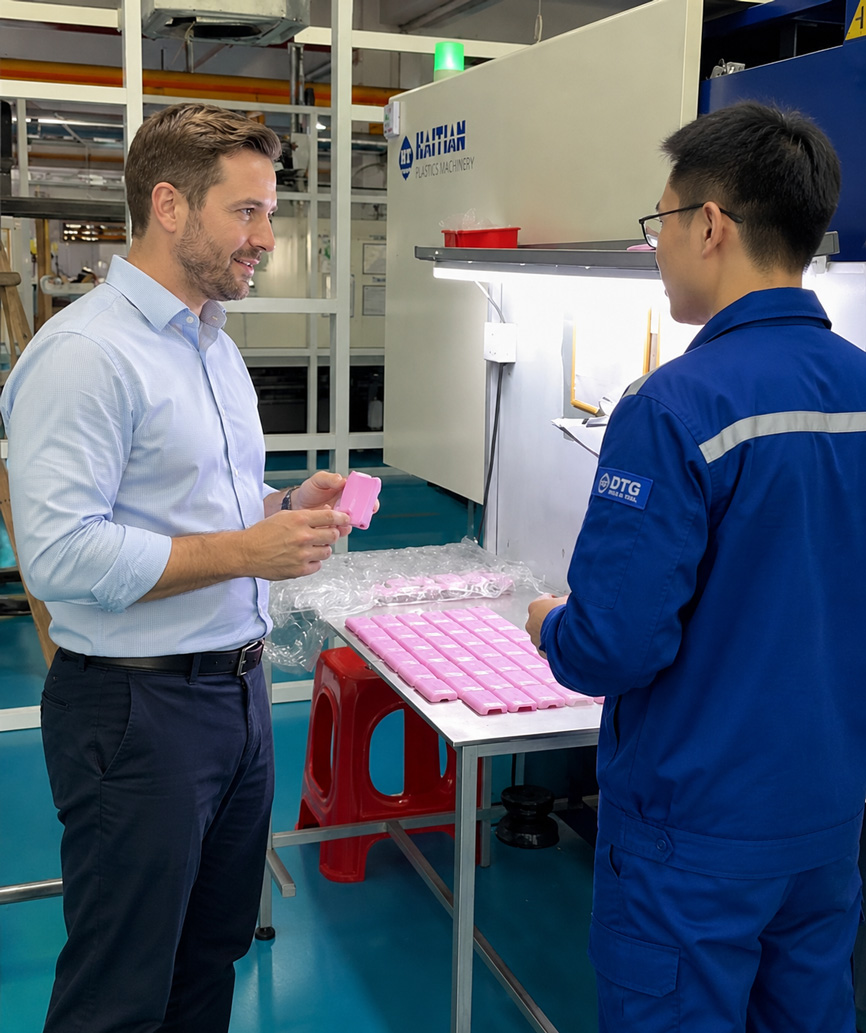
At DTG TECH CO., LTD., we provide mold design, mold manufacturing, prototyping, and injection molding services. Our development process includes engineering evaluation, mold processing, trial samples, customer feedback, and production preparation. This guide explains what buyers should expect at each stage, which information to prepare, and how to reduce avoidable project risks.
1. Understanding the Full PET Mold Development Process
PET mold manufacturing and PET container production are closely connected, but they represent different stages of the manufacturing project.
The mold is the production tool that defines the container’s geometry, surface finish, and important molding features. Injection molding uses that tool repeatedly to manufacture plastic parts under controlled processing conditions.
For a custom cosmetic jar or clear organizer box, the development process generally follows this sequence:
- Initial quotation and technical requirements
- Product design review and design for manufacturability (DFM)
- Mold design, machining, and assembly
- Initial mold trial and sample evaluation
- Tooling adjustments and additional trials, if necessary
- Customer sample approval and production planning
- Production verification, mass production, and quality inspection
- Packaging and delivery
Tooling Cost Versus Part Cost
One important purchasing distinction is the difference between the initial mold investment and the unit price of each molded component.
| Cost Category | Main Cost Drivers | Purchasing Consideration |
|---|---|---|
| Mold development cost | Part complexity, cavity count, mold steel, machining, cooling system, and tooling mechanisms | Usually an upfront investment; clarify tooling scope and ownership |
| Molded part cost | Resin grade, part weight, cycle time, production quantity, inspection, and handling | Evaluate against expected order volume and quality requirements |
| Additional project costs | Design changes, decoration, assembly, packaging, testing, and freight | Confirm what is included in the quotation |
A lower initial tooling quotation does not necessarily result in a lower total project cost. Mold durability, cycle time, maintenance requirements, and production consistency should also be considered.
2. Preparing for the Initial Mold Quotation
The quality of the initial quotation depends heavily on the information supplied by the buyer. Incomplete drawings or unclear product requirements can lead to assumptions that later affect tooling design, cost, and delivery.
At DTG, our quotation process begins with a discussion of the customer’s technical and commercial requirements. For custom plastic mold development, we recommend preparing the following information.
| Required Information | Why It Matters |
|---|---|
| 2D drawings and 3D CAD files | Define product geometry, critical dimensions, and tooling requirements |
| Material specification | Establishes the intended PET grade and relevant processing requirements |
| Appearance requirements | Clarifies transparency, color, gloss, and acceptable cosmetic marks |
| Functional requirements | Identifies sealing surfaces, lid fit, snap retention, and assembly conditions |
| Estimated production volume | Supports decisions about cavity count, mold construction, and production planning |
| Order frequency and delivery requirements | Helps evaluate scheduling, inventory, and shipment arrangements |
| Existing mold or new tooling | Determines whether the project involves mold development, transfer, or modification |
If a complete CAD model is not available, a reference sample, photographs, and a dimensioned specification can provide a starting point. However, the design may require further engineering definition before a firm tooling quotation can be established.
Buyers should also clarify whether the quotation covers the mold alone or includes molded samples, production parts, assembly, packaging, and transportation.
3. Design Review and DFM: Identifying Risks Before Tooling
Design for manufacturability, commonly called DFM, evaluates whether a proposed product can be manufactured consistently using the intended molding process.
Our engineering team reviews product geometry against the requirements of mold construction, material processing, part release, and assembly. This review helps identify issues before mold machining makes changes more expensive.
Key Design Items to Review
- Wall thickness: Uneven sections can increase cooling differences, shrinkage, and distortion.
- Draft angles: Adequate draft supports reliable demolding and helps reduce surface damage.
- Gate location: The entry point affects filling behavior and the visibility of gate marks.
- Parting lines and ejector marks: Their positions should be evaluated against the product’s cosmetic requirements.
- Threads, ribs, and undercuts: These features can affect mold complexity, assembly fit, and maintenance.
- Critical tolerances: Dimensions important to sealing, stacking, or lid engagement should be identified separately from general dimensions.
PET-Specific Manufacturing Considerations
Transparent PET parts require particular attention to cooling and melt flow. PET is a semicrystalline polyester, and excessive crystallization during cooling can reduce clarity. Thick sections and areas with uneven heat removal may be more susceptible to visible haze.
Gate geometry, venting, and cooling-channel placement therefore deserve early consideration. Poorly managed gate temperatures can contribute to localized whitening, while insufficient venting may produce trapped-gas defects.
The correct molding approach also depends on the product. A rigid injection molded organizer box is not manufactured in the same way as a lightweight stretch-blow-molded PET bottle. Material grade and manufacturing method should be agreed before tooling design is released.
The DFM stage should conclude with an approved design revision and clearly documented requirements. Once mold processing begins, changes to the geometry can affect both cost and schedule.
4. PET Mold Manufacturing and Initial Trial Samples
After design approval, the project enters mold design and manufacturing. The mold generally includes cavity and core components, a runner and gate system, cooling channels, ejection mechanisms, and any additional components needed for the product geometry.
Tooling materials and surface finishes are selected according to production volume, expected wear, corrosion considerations, and appearance requirements. Transparent parts may require carefully finished molding surfaces, but the appropriate steel and polishing specification should be determined for the actual project rather than selected from a universal material list.
At DTG, mold processing is followed by mold testing and customer sample evaluation. We provide progress updates during mold processing and can carry out agreed modifications based on trial feedback.
What Is a T1 Mold Trial?
T1 refers to the first mold trial. Its main purpose is to verify whether the assembled mold can produce the intended part and to identify issues requiring correction.
T1 samples may reveal short shots, flash, trapped gas, deformation, difficult ejection, or unexpected dimensional variation. They are not necessarily final production-approved samples.
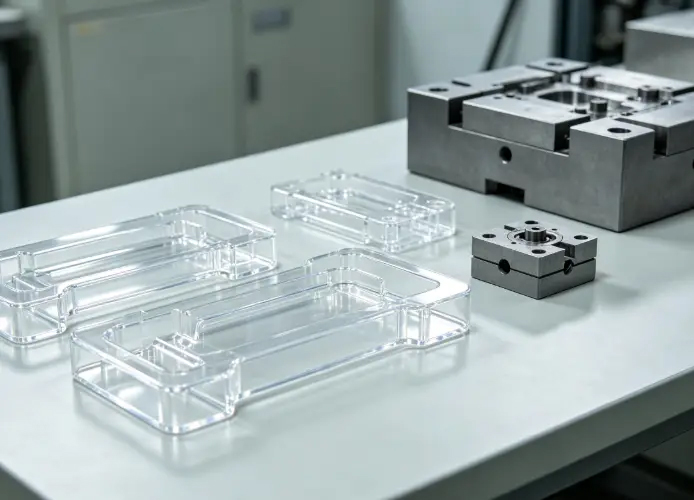
Initial trials help identify mold-related issues before the product is released for production.
From T1 to Additional Trials
If T1 identifies problems, the engineering team should document the findings, define corrective actions, and verify the results in a subsequent trial. A second trial is often called T2, although the number of trials depends on the complexity of the project and the issues encountered.
| Trial Stage | Primary Objective | Typical Review Items |
|---|---|---|
| T1: Initial trial | Verify basic molding feasibility | Filling, venting, ejection, visible defects, preliminary dimensions |
| T2: Follow-up trial | Check corrections and improve part quality | Critical dimensions, surface appearance, assembly fit, molding stability |
| Production verification, if required | Evaluate repeatability under planned production conditions | Process consistency, cycle time, recurring defects, tool operation |
For purchasing managers, the important question is not simply how many trials are included. It is whether the supplier has a clear process for recording issues, communicating changes, and confirming that corrective actions are effective.
5. Sample Approval and Production Planning
Sample approval is the point at which engineering expectations become agreed manufacturing requirements. Before authorizing production, the buyer and supplier should confirm that the sample meets the specified dimensions, appearance, and functional criteria.
For clear PET containers, acceptance criteria may include transparency, color consistency, gate appearance, wall thickness, lid engagement, and sealing performance where applicable.
We recommend documenting the approved drawing revision, material grade, sample identification, inspection criteria, and any agreed deviations. Where appropriate, retained reference samples can support future comparisons.
What Should Be Approved?
- Product drawing and revision number
- Material grade and color requirements
- Critical dimensions and inspection methods
- Acceptable surface marks and transparency criteria
- Assembly, retention, or leakage test requirements
- Production quantity and delivery schedule
- Packaging and shipment requirements
After sample approval, production planning should address material availability, machine and mold scheduling, inspection requirements, and expected shipment dates.
A successful sample does not eliminate the need to verify production consistency. Where the project risk warrants it, a limited production run can help confirm that the approved quality can be maintained over repeated molding cycles.
6. Mass Production and Quality Assurance
During mass production, the objective changes from proving that a part can be molded to maintaining consistent quality over the required quantity.
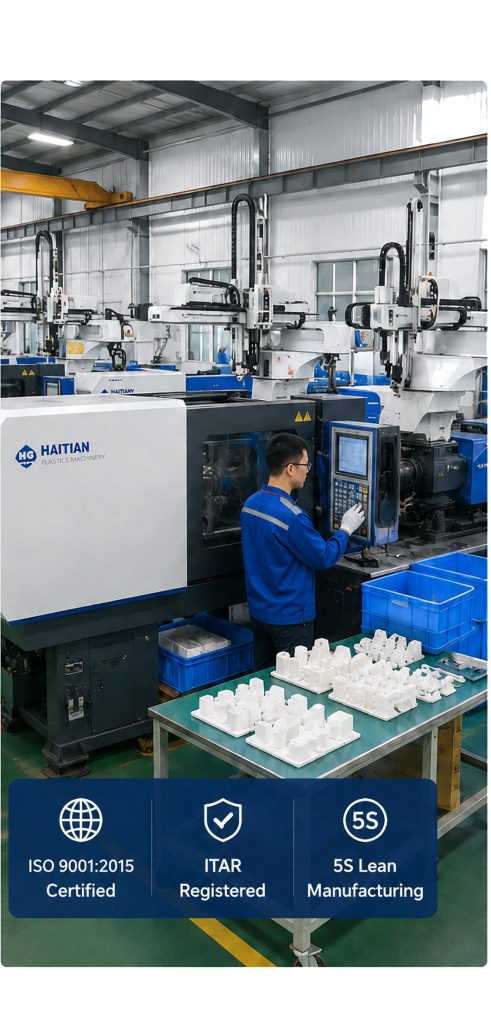
DTG provides injection molding services for different production volumes. Inspection requirements and process controls should be established according to each product’s critical features and agreed acceptance standards.
Material Preparation and Process Stability
PET processing requires attention to material drying because moisture can cause hydrolytic degradation during melt processing. Resin handling and drying conditions should follow the selected material supplier’s recommendations.
Cooling performance also affects transparency and dimensional stability. Actual mold surface temperatures may differ from temperature-control equipment settings, so process evaluation should consider the mold’s thermal behavior rather than relying only on a nominal setting.
In humid environments, condensation on cold mold surfaces can contribute to appearance defects. This is another reason why environmental conditions and mold cooling need to be evaluated together.
Inspection Throughout Production
Depending on the agreed quality plan, inspection may include first-piece verification, periodic dimensional checks, visual inspection, assembly testing, and final checks before packaging.
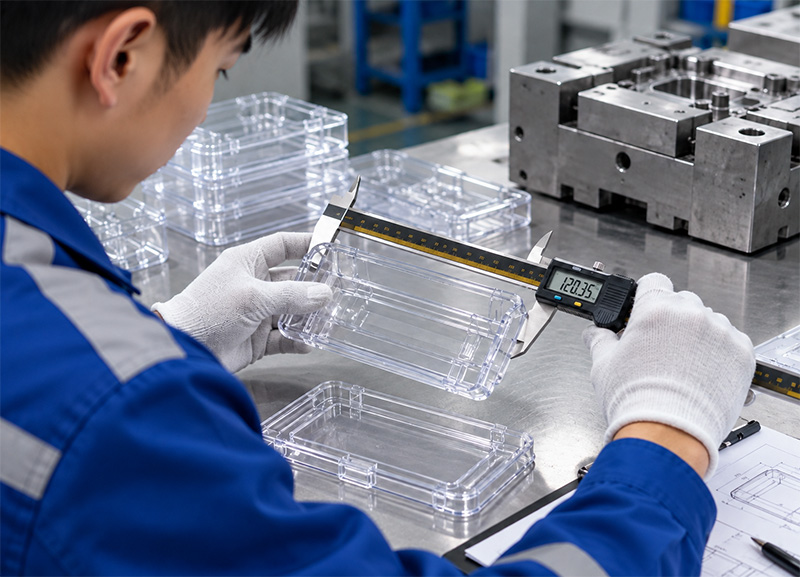
Dimensional and functional checks help establish whether molded parts remain consistent with the approved specification.
If a nonconforming condition is identified, affected parts should be evaluated against the agreed criteria, and the cause should be investigated before corrective actions are verified. The appropriate documentation and inspection frequency depend on the product’s risk and contractual requirements.
For buyers, useful quality evidence may include sample inspection results, agreed measurement records, nonconformance reports, and records of approved engineering changes. These should be specified during supplier qualification rather than assumed to be automatically included.
7. Managing Cost, Lead Time, and Communication
The schedule for a PET tooling project is affected by more than machining time. Product complexity, material selection, design changes, sample evaluation, and customer approval can all influence the overall development period.
| Project Factor | Potential Impact | How Buyers Can Reduce Risk |
|---|---|---|
| Complex product geometry | More complicated tooling and longer development | Review geometry during DFM |
| Late design changes | Tool modifications and additional trials | Approve the design before machining |
| Unclear sample feedback | Repeated discussion and delayed corrections | Use measured results and annotated drawings |
| Changing order forecasts | Production scheduling and material planning difficulties | Share expected order quantities early |
| Delayed customer approval | Later production release | Assign decision-makers and review deadlines |
Our process includes mold processing updates and customer review of trial samples. For international projects, written confirmation of technical decisions helps reduce misunderstandings across time zones and between engineering and purchasing teams.
Buyers should request a project schedule that identifies major milestones and approval dependencies. Any estimated lead time should be understood in relation to the final design, tooling scope, and expected number of verification cycles.
8. How to Evaluate an Injection Molding Supplier
Supplier evaluation should focus on the ability to manage the complete project, not only the quoted mold price.
A manufacturing partner that can coordinate mold development and injection molding may simplify technical communication. However, buyers should still confirm the supplier’s actual capabilities for the specific resin, part geometry, quality requirements, and production volume.
Supplier Evaluation Checklist
- Engineering support: Can the supplier review CAD files and identify manufacturability risks?
- Mold development: Can the supplier explain the proposed mold structure, material choices, and trial plan?
- Sample approval: Is there a defined process for recording defects, implementing changes, and confirming results?
- Production capability: Can the supplier support the required quantity, resin grade, and appearance specification?
- Quality management: Can the supplier explain its inspection approach and provide the records required by the project?
- Communication: Are progress updates, technical changes, and delivery expectations clearly documented?
- Long-term support: How will mold maintenance, repeat orders, and future design revisions be managed?
DTG’s service scope covers mold design, prototyping, mold manufacturing, and injection molding through production. Our project workflow includes design evaluation, trial sample approval, and customer feedback before delivery.
For packaging projects, buyers can review our custom PET cosmetic packaging and clear organizer boxes page to understand the product categories relevant to this manufacturing approach.
If the project is still at the product-definition stage, our article on customizing clear PET cosmetic jars and organizer boxes explains the design inputs to prepare before mold development.
9. Frequently Asked Questions
What information is needed for a PET mold quotation?
A useful quotation package includes 2D drawings, 3D CAD files where available, material requirements, estimated production quantity, critical dimensions, surface appearance criteria, and delivery expectations. If a sample is available, it can help communicate product geometry and assembly requirements.
What happens before mass production begins?
The product design is reviewed, the mold is manufactured, and trial samples are evaluated. Any necessary tooling corrections are made and verified. Production should begin only after the agreed samples, specifications, and manufacturing arrangements have been approved.
How are trial samples approved?
Samples are assessed against the agreed drawings and acceptance criteria. Depending on the product, this may include dimensional measurements, visual inspection, lid fit, sealing tests, or other functional checks. Approval should be documented, with a clear reference to the applicable product revision.
Can one supplier manage both mold development and production?
Yes. DTG offers both mold manufacturing and injection molding services. A coordinated workflow can simplify the transition from tooling to production, although the precise scope, responsibilities, and quality documentation should be agreed for each project.
How long does the PET mold development process take?
The duration depends on part complexity, mold construction, machining requirements, sample results, design changes, and customer approval time. A reliable schedule should be prepared after the design and tooling scope are sufficiently defined, rather than based on a universal lead-time estimate.
10. Preparing Your PET Project for a Reliable Production Launch
A successful PET mold development process requires more than manufacturing a tool. Buyers need a defined product specification, early DFM review, meaningful mold trials, documented sample approval, and production controls aligned with the final application.
For transparent PET products, material drying, cooling uniformity, gate design, and appearance acceptance deserve particular attention. For purchasing teams, equally important considerations include quotation scope, communication responsibilities, revision control, and production scheduling.
At DTG, we support customers from design evaluation and mold manufacturing through sample approval and injection molding production. Clear requirements at the beginning of the project help both teams make informed decisions throughout development.
Discuss Your PET Mold and Production Requirements
If you are planning a PET cosmetic container, organizer box, or another custom injection molded component, share your drawings, material requirements, estimated quantities, and project schedule with our engineering team. We can review the information and discuss moldability, development scope, and quotation requirements.