Two Color Injection Molding for Custom Plastic Combs: Design, Tooling and Production Considerations
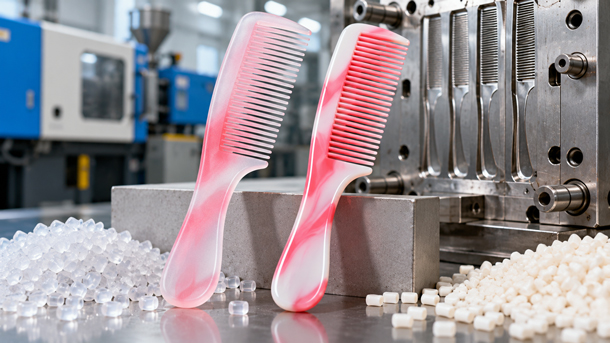
Two color injection molding allows manufacturers to produce plastic components with two colors or two compatible materials within one integrated molding process. For products such as custom plastic combs, this technology provides opportunities for visual differentiation, functional material combinations and more complex product designs.
However, a two-color plastic comb is not simply a standard comb molded twice with different colors. The success of a two-shot plastic comb depends on how product geometry, mold structure, material compatibility, filling behavior and process control work together. At DTG, our engineering team evaluates these factors during mold development to help customers create designs that are suitable for repeatable production.
What Is Two Color Injection Molding?
Two color injection molding, also known as two shot injection molding or dual color injection molding, is a process where two different colors or materials are molded into one finished part through multiple injection stages.
Unlike conventional single-color injection molding, which creates one material structure in one molding cycle, a two-color process requires the mold and machine system to manage two separate filling stages while maintaining accurate positioning between them.
| Process Type | Manufacturing Characteristics |
|---|---|
| Single-color injection molding | One resin and one color form the complete part structure in a single molding stage. |
| Two color injection molding | Two colors or materials are introduced through controlled molding stages with accurate alignment between sections. |
| Overmolding | A secondary material is molded over an existing substrate, often for functional or ergonomic purposes. |
The terms may overlap in some applications, but the actual tooling design and material interaction determine the correct manufacturing approach.
How Two-Color Comb Design Influences Mold Development
A successful custom two color plastic molding project begins with product structure. The designer needs to consider not only where each color appears, but also how the mold will create, support and maintain the boundary between the two sections.
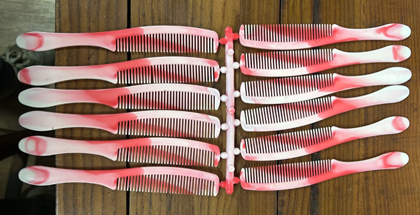
For a plastic comb, common two-color concepts may include a different color for the handle area, decorative sections, logo regions or selected functional zones. Each design choice affects cavity layout, gate location, part positioning and second-shot filling behavior.
- Color boundary location and appearance requirements
- Positioning accuracy between the first and second molding stages
- Interaction between thin comb teeth and secondary filling pressure
- Surface finish, texture and visible appearance areas
- Material compatibility when two different plastics are involved
Two-Color Injection Mold Structure
The mold structure is one of the most important differences between single-color and two-color production. A two-color injection mold must allow the first molded section to remain accurately positioned while the second color or material is introduced.
Depending on the machine configuration and product requirements, two-shot systems may use approaches such as rotary mold structures, rotating platens or part transfer mechanisms. The purpose is the same: maintain accurate registration between the first shot and second shot.
At DTG, our mold design process focuses on how each molding stage interacts. The mold layout, cavity arrangement, part positioning, runner design, cooling strategy and ejection system must be considered together rather than independently.
Material and Color Selection for Two Shot Plastic Combs
Color selection and material selection are related but not identical decisions. A project using the same base resin in two colors mainly focuses on color consistency and process stability. A project combining different materials requires additional evaluation of compatibility, shrinkage behavior and bonding performance.
| Design Consideration | Why It Matters |
|---|---|
| Material compatibility | Different materials may require evaluation of interface bonding, shrinkage differences and processing conditions. |
| Color preparation | Color consistency depends on resin selection, pigment preparation and stable molding conditions. |
| Thermal behavior | Different cooling and shrinkage characteristics can influence dimensional stability. |
For resin selection considerations including PP, ABS and other plastic options, customers can also review our guide on plastic comb materials and selection.
First Shot and Second Shot Control
First Shot: Creating a Stable Foundation
The first shot creates the foundation for the second molding stage. Its dimensional stability and positioning accuracy directly influence the final two-color part.
For comb applications, the first shot may already include challenging features such as narrow teeth, thin sections or detailed surfaces. Incomplete filling, deformation or excessive shrinkage during this stage can affect the accuracy of the second shot.
Second Shot: Maintaining Alignment and Interface Quality
During the second shot, the mold must deliver the additional material into the correct area without shifting the first-shot component. The process must control filling behavior, interface quality, color separation and final appearance.
Color Boundary and Appearance Control
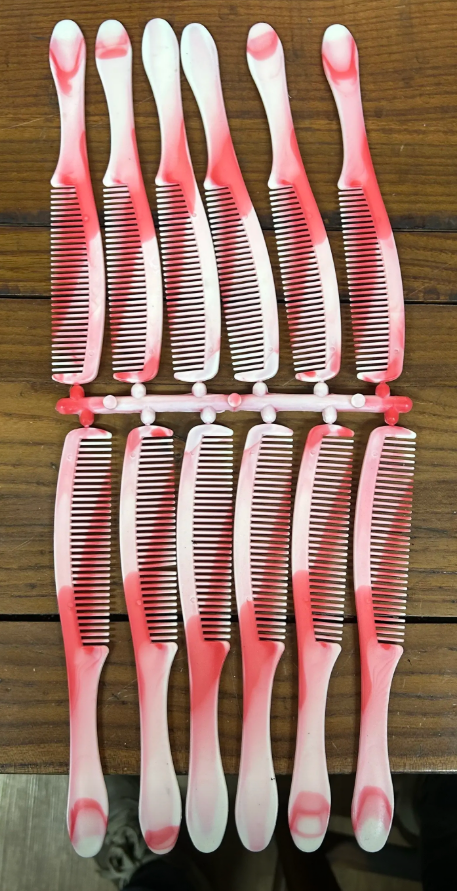
For two color plastic parts, appearance is often one of the main reasons customers choose the process. However, achieving a clean visual boundary requires more than selecting two colors.
The mold design and process conditions must control issues such as color overflow, uneven transitions, flow marks, weld lines and surface defects. For a comb, these concerns are especially important because the product usually contains visible surfaces and repeated geometric features.
Common Two Color Injection Molding Defects
| Defect | Possible Cause | Engineering Focus |
|---|---|---|
| Color bleeding | Poor boundary control or material interaction. | Mold sealing, process control and material selection. |
| Misalignment | Positioning variation between molding stages. | Tooling accuracy and transfer positioning. |
| Poor bonding | Unsuitable material combination or interface conditions. | Material compatibility and process evaluation. |
| Warpage | Different shrinkage behavior between sections. | Cooling balance and dimensional control. |
| Tooth deformation | Cooling, ejection or structural stress. | Comb geometry, mold release and process stability. |
Quality Inspection for Two-Color Plastic Parts
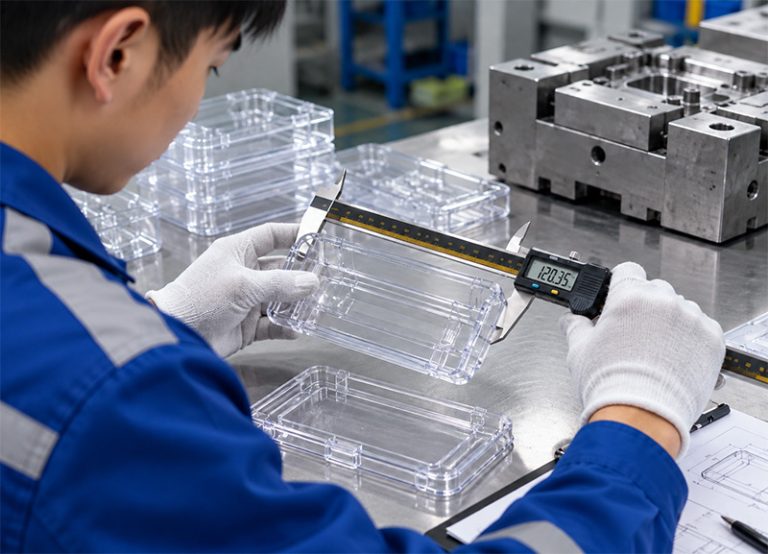
Quality control for a custom two color plastic molding project should focus on the characteristics that affect function, appearance and production consistency.
- Overall dimensions and critical product geometry
- Tooth spacing, straightness and deformation for comb structures
- Color boundary position and color consistency
- Surface finish and visible appearance defects
- Flash, short shots and molding defects
- Alignment between first-shot and second-shot sections
From Two-Color Prototype to Repeatable Production
A successful two-color molding project requires more than creating two visual areas on a product. The process must maintain stable positioning, repeatable filling, controlled cooling and consistent inspection results throughout production.
At DTG, we support customers through mold design evaluation, tooling development, trial molding, sample review and production preparation. Our approach connects product requirements with practical manufacturing considerations before mass production begins.
If you are developing a two-color comb or other multi-color plastic component, our engineering team can discuss moldability, material options and production requirements based on your design information.
Discuss Your Two-Color Molding Requirements
Share your CAD data, drawings or product concept with DTG. We can help evaluate whether a two-shot injection molding approach is suitable and identify key design considerations before tooling.
Talk to Our Engineering Team