Plastic Toy Manufacturing Process: How to Choose the Right Method
When sourcing a new toy, purchasing teams often start with unit price, MOQ, tooling cost and delivery time. However, these commercial questions are closely connected to the plastic toy manufacturing process selected for the product. A small, detailed sports figure, a large hollow animal, and a lightweight outdoor toy may all require completely different manufacturing approaches.
Common toy manufacturing methods include injection molding, blow molding, rotational molding, thermoforming, extrusion and other forming processes. For many custom plastic toys, however, injection molding, blow molding and rotational molding are the three processes worth understanding first.
There is no universally superior process. The right choice depends on product size, geometry, wall thickness, material, appearance, assembly requirements, annual volume and target cost. From a procurement perspective, choosing the process before comparing supplier quotations can make it much easier to understand the real cost and manufacturing risk.
Procurement takeaway: Do not ask only, “How much does this toy cost?” Ask which manufacturing process is being proposed, why it is suitable, what tooling is required, and how the process affects unit cost, quality and scalability.
1. Injection Molding for Plastic Toys
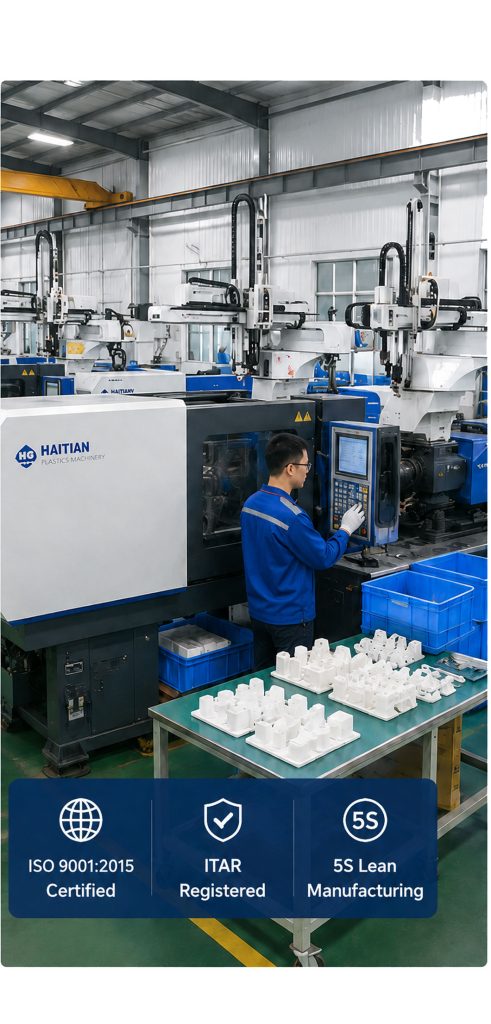
Injection molding is one of the most widely used processes for producing detailed plastic components at scale. Plastic resin is heated and plasticized inside the injection molding machine, then injected under pressure into a closed mold cavity. After cooling and solidification, the mold opens and the molded part is ejected.
Depending on the product, molded components may then go through trimming, painting, pad printing, screen printing, ultrasonic welding, assembly or packaging.
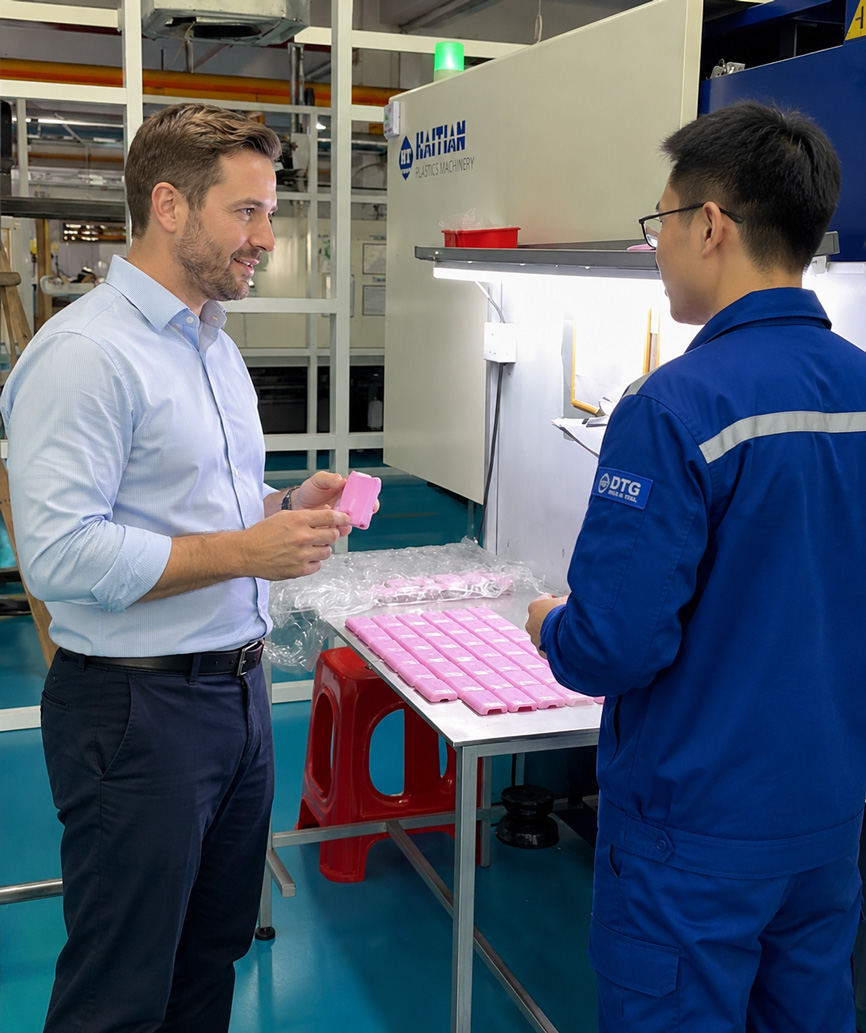
At DTG, our engineering and molding teams can support projects from product evaluation and mold development through trial molding and production. Our injection molding service covers prototyping as well as scalable production, so the manufacturing approach can be evaluated before a project moves into full production.
Explore DTG plastic injection molding services if your project requires detailed plastic parts, repeatable dimensions or production tooling.
Why Injection Molding Works Well for Detailed Toys
Injection molding is particularly useful when the product contains fine geometry or multiple interfaces. A small sports figure, for example, may include facial features, clothing details, footwear, accessories, a base and several assembly points.
- Fine surface and geometric details can be reproduced through the mold.
- Dimensional consistency is well suited to multi-part assemblies.
- Shorter molding cycles can support higher production volumes.
- The tooling investment can be distributed across larger production quantities.
- A wide range of thermoplastic materials can be considered depending on the application.
The trade-off is that custom injection molded toys normally require dedicated tooling. Product design, mold design, machining, mold trials and sample approval therefore become part of the project schedule.
When Injection Molding May Not Be the Best Choice
A very large hollow toy may be unnecessarily expensive if it is manufactured as a thick or solid injection molded structure. The larger mold, higher machine requirements, material consumption and product weight can all affect the economics.
For this reason, a purchasing team should not assume that injection molding is automatically the lowest-cost solution simply because it is widely used.
2. Blow Molding for Hollow Toys
Blow molding is designed primarily for hollow plastic products. In a typical extrusion blow molding process, heated plastic forms a soft tubular parison. The mold closes around it, and air pressure expands the plastic against the inside surface of the mold. After cooling, the hollow product is removed and trimmed as required.
This makes blow molding useful when the product needs substantial external volume without being solid throughout.
Typical Toy Applications
- Hollow balls and ball-shaped toys
- Large hollow toy bodies
- Toy bottles and containers
- Hollow animal shapes
- Selected large lightweight toy components
For procurement teams, the major advantage is the ability to create a relatively large product while keeping the interior hollow. This can reduce material consumption and product weight compared with a solid construction.
However, blow molding has different design constraints. Parison behavior, material distribution, wall thickness, pinch-off areas and trimming all need to be considered. Very small or highly detailed assembly features are generally less suitable than they are for precision injection molding.
3. Rotational Molding for Large Hollow Toys
Rotational molding, or rotomolding, uses a different approach. A measured quantity of plastic material is placed inside a mold, the mold is closed and then heated while rotating around multiple axes. The material gradually melts and coats the inside surface of the mold. After cooling, the mold is opened and the hollow product is removed.
Rotational molding is particularly relevant to larger hollow products where a relatively thick, durable wall and an integrated form are desirable.
Typical Applications
- Large animal-shaped toys
- Ride-on toy bodies
- Outdoor children’s toys
- Large hollow models
- Selected playground and recreational components
One advantage is that the process can create large hollow structures without the high injection pressure associated with conventional injection molding. It can therefore be a practical option for certain large-format products. However, the molding cycle is generally slower, and very small precision features are not its primary strength.
4. Injection Molding vs. Blow Molding vs. Rotational Molding
The following comparison gives purchasing teams a practical starting point. Actual process selection should still be based on the product design, material, tooling strategy and production volume.
| Factor | Injection Molding | Blow Molding | Rotational Molding |
|---|---|---|---|
| Primary structure | Solid or thin-wall parts | Hollow products | Large hollow products |
| Detail capability | High | Moderate | Moderate to limited for fine details |
| Dimensional control | Generally high | Moderate; wall distribution matters | Generally lower for precision features |
| Large hollow toys | May be costly | Well suited | Very well suited |
| Production speed | Generally fast | Generally fast | Generally slower |
| Typical strength | Detailed, repeatable parts | Lightweight hollow forms | Large durable hollow structures |
5. Why Manufacturing Process Changes the Toy Cost
Two toys that look similar in a photograph can have very different manufacturing costs. The difference may come from tooling, material consumption, cycle time, secondary operations or assembly rather than simply from the supplier’s margin.
Tooling Cost
Different processes require different tooling strategies. Injection molds may incorporate cores, cavities, runners, gates, cooling channels, ejector systems, slides and inserts depending on the part. Blow and rotational molding use different tooling structures and have their own cost drivers.
Material Consumption
A solid or thick-wall injection molded product can consume considerably more resin than a comparable hollow product. When annual volume is high, even a relatively small difference in material usage can materially affect total purchasing cost.
Cycle Time and Secondary Operations
Production economics are also affected by molding cycle time, machine utilization, labor and post-processing. Painting, pad printing, assembly, welding, labeling and packaging can sometimes represent a significant portion of the finished cost.
A useful procurement question
Instead of comparing only the quoted unit price, ask suppliers to explain the proposed process, tooling assumptions, material, expected production volume and major secondary operations. This makes quotations much easier to compare on an equivalent basis.
6. What Procurement Teams Should Check Before Ordering
Before requesting tooling quotations, purchasing teams should prepare enough technical information for the manufacturer to evaluate manufacturability.
- Product dimensions: Provide overall length, width and height where available.
- Solid or hollow construction: This can immediately narrow down suitable processes.
- 3D data or drawings: CAD files allow the engineering team to evaluate structure and tooling requirements.
- Expected quantity: Annual volume and expected replenishment matter when selecting tooling and production strategy.
- Material requirements: If the resin is not fixed, ask the manufacturer to recommend suitable options.
- Appearance: Identify requirements for texture, painting, printing, logos and color matching.
- Assembly: Identify snap fits, screws, joints, inserts and other interfaces early.
- Target market: The intended market can affect product safety, material selection and compliance requirements.
The more complete these inputs are, the easier it is for a supplier to provide a meaningful process recommendation rather than simply pricing a photograph.
7. How We Evaluate a Custom Toy Project at DTG
At DTG, we prefer to evaluate the product before committing to a tooling approach. Our normal workflow can include product design review, mold development, mold testing, sample approval, mold modification and production. This allows manufacturing concerns to be identified before the project reaches stable batch production.
For an injection molded toy, our engineering team would typically look at factors such as part geometry, draft, wall thickness, assembly interfaces, tooling access and the intended production volume. The objective is not simply to make a mold that produces the shape, but to develop a process that can produce the required part consistently.
DTG also provides mold manufacturing and injection molding as connected services. That can reduce the communication gap between tooling and production teams when design changes or mold trials are required. Our published manufacturing workflow includes mold processing, trial samples, customer confirmation and mold modification before delivery or production.
See the plastic sports figure product example to understand how a detailed sports-themed plastic product can be approached from a manufacturing perspective.
8. Quality Risks Depend on the Process
Process selection also affects what the production team needs to monitor. Injection molded toys may require attention to short shots, flash, sink marks, weld lines, warpage, dimensional variation and assembly fit. Blow molded products can require closer control of wall thickness, pinch-off areas, trimming and leakage. Rotationally molded parts may require attention to wall distribution, surface defects, bubbles and deformation.
For children’s products, manufacturing quality is only one part of the evaluation. The design should also be reviewed for small components, sharp edges, points, mechanical durability, material selection and other requirements applicable to the intended market.
From a supplier evaluation perspective, this is important because a factory’s quality capability should match the manufacturing process rather than rely on a generic inspection checklist. DTG operates an ISO 9001:2015 quality management system and describes its injection molding operation as covering design, manufacturing and quality control activities.
9. Common Procurement Mistakes
| Mistake | Why It Creates Risk | Better Approach |
|---|---|---|
| Assuming injection molding is always best | Large hollow products may become unnecessarily heavy or expensive. | Compare the process against product size and structure. |
| Comparing only tooling prices | Low tooling cost may lead to higher production or maintenance costs. | Evaluate tooling, cycle time, quality and expected production volume together. |
| Requesting a quote from a photo only | The supplier cannot reliably assess wall thickness, assembly or tooling requirements. | Provide drawings, CAD data, dimensions and quantity where possible. |
| Ignoring secondary operations | Painting, printing and assembly can significantly affect finished cost. | Request a complete manufacturing cost breakdown. |
10. Which Process Should You Choose?
As a general starting point, injection molding is usually worth evaluating first when a toy is relatively small or medium-sized, requires detailed geometry, has multiple assembly components and is expected to be produced in substantial quantities.
Blow molding becomes more attractive when the product is hollow, relatively lightweight and does not require highly precise small features. Rotational molding is worth considering when the product is larger, hollow and structurally simple, particularly where a durable integrated shell is required.
The important point is that the product should drive the process—not the other way around.
Developing a Custom Plastic Toy?
If you are developing a sports figure, character, animal model, toy vehicle or other custom plastic product, share the available product images, CAD files, dimensions, expected quantity, material requirements and target market with our engineering team.
We can review the product from a manufacturing perspective and discuss whether injection molding or another molding approach is appropriate before tooling begins.
Conclusion: Choose the Process That Fits the Product
Injection molding, blow molding and rotational molding are all established plastic manufacturing processes, but they solve different manufacturing problems.
- Injection molding: well suited to detailed, dimensionally consistent parts and higher-volume production.
- Blow molding: well suited to lightweight hollow products and larger-volume production of suitable geometries.
- Rotational molding: well suited to larger hollow products where an integrated, durable structure is required.
For purchasing teams, the best manufacturing decision starts with the product definition: size, geometry, wall thickness, function, appearance, quantity, target cost, operating environment and destination market.
Once those requirements are clear, an experienced manufacturing partner can help balance product performance, tooling investment, production efficiency and unit cost. At DTG, our focus is to connect product evaluation, mold development and production planning so that manufacturing decisions are made before avoidable tooling and production risks become expensive problems.