How to Choose a
Plastic Toy Manufacturer Beyond Unit Price
For a new OEM toy project, finding a plastic toy manufacturer is
relatively easy. Finding one that can reliably manage product development, tooling, material control,
production quality, testing coordination, packaging, and delivery is much more difficult.
A common sourcing process is to send the same product image or drawing to several
suppliers, collect quotations, and select the lowest unit price. That approach may work for a simple
standard product using an existing mold. For a custom product requiring new tooling, however, the quotation
is only one part of the commercial risk.
For purchasing managers, the more useful question is not simply, “Who quoted the lowest
price?” It is: “Which supplier can control the entire project from engineering through repeat
production and delivery?”
1. Confirm Who Actually Controls Manufacturing
The first step is understanding the supplier’s business model. A company described
online as a manufacturer may operate its own factory, combine manufacturing and trading activities, manage
external production partners, or function mainly as a sourcing company.
None of these models is automatically good or bad. The important issue for an OEM or
ODM buyer is visibility: who is actually responsible for molding, tooling, quality decisions,
corrective actions, and production scheduling?
Direct manufacturing control becomes particularly valuable when a problem appears
during tooling or trial production. If, for example, the arm of an injection-molded sports figure is too
tight during assembly, engineering, mold making, and molding personnel need to review the same problem
quickly. Multiple layers of subcontracting can make this feedback loop slower and less transparent.
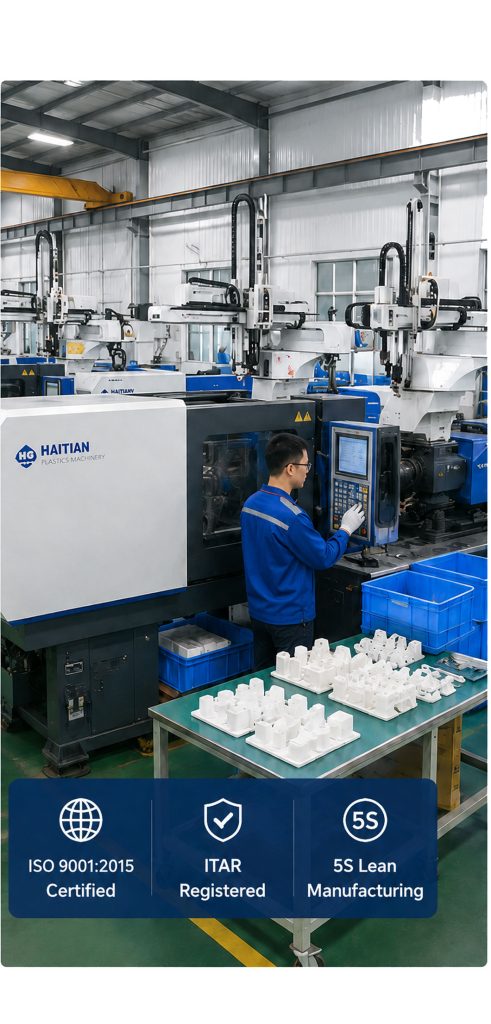
During supplier qualification, ask for the factory location, workshop information, molding
capability, mold-making arrangements, assembly and packing areas, QC facilities, and the product categories
regularly produced. For strategically important programs, a video audit, third-party audit, or site visit
can provide additional verification.
2. Match the Supplier’s Product Experience to Your Toy
“Plastic toys” is a broad manufacturing category. A factory producing small
character figures may require very different engineering and process knowledge from one producing beach
buckets, baby toys, remote-control housings, or large hollow outdoor products.
A purchasing team should therefore look beyond the question, “Do you manufacture
toys?” A better question is: “Have you manufactured products with a similar material, geometry,
tooling concept, decoration process, and assembly method?”
For example, a small football-player figure may depend heavily on molded detail,
dimensional consistency, part fit, painting, pad printing, and small-component assembly. A large PP bucket
may place greater emphasis on toughness, wall thickness, molding efficiency, and nesting or set
configuration. Large hollow products may require an entirely different molding process.
When evaluating a custom plastic toy manufacturer, product similarity is
often more informative than the supplier’s age alone. For an example of the type of molded figure
application relevant to this discussion, see our plastic sports figures for OEM and ODM
manufacturing.
3. Evaluate Engineering and DFM Capability Before Tooling
Custom toy projects can begin with very different levels of information. Some
customers already have complete 3D files. Others have only 2D drawings, reference images, or an early
product concept. The less mature the input data, the more important the supplier’s engineering capability
becomes.
At DTG, our engineering and mold-development workflow includes design evaluation
before mold processing. From a manufacturability perspective, the objective is to identify avoidable
problems before steel is cut.
A useful DFM review may consider wall thickness, draft, parting lines, undercuts,
assembly relationships, molding feasibility, material choice, mold structure, and opportunities to simplify
production. A feature that looks acceptable in CAD may create short shots, warpage, sink marks, difficult
ejection, or unnecessarily complex mold actions in production.
This engineering stage matters commercially as well as technically. Additional
slides, lifters, inserts, secondary operations, or difficult assembly steps can increase tooling cost, cycle
time, maintenance requirements, and long-term production risk.
Our plastic injection molding
service covers the progression from design evaluation and mold development through mold trials and
production, allowing engineering decisions to be reviewed in the context of the complete manufacturing
process.
4. Treat Tooling as a Long-Term Production Asset
For an injection-molded toy, the mold establishes much of the foundation for
dimensional consistency, surface appearance, flash control, parting-line condition, assembly fit, production
efficiency, and repeatability.
This is why a lower tooling quotation is not necessarily a lower-cost solution. A
mold that requires frequent repair, produces inconsistent dimensions, runs slowly, or develops flash can
create costs long after the initial tooling invoice has been paid.
Before awarding a tooling program, purchasing teams should clarify:
- Where the mold will be manufactured.
- What mold material or steel specification is proposed.
- What production life is expected for the intended application.
- Who owns the tooling after payment.
- How preventive maintenance, rust prevention, repairs, and wear components
will be managed.
For repeat orders, tooling ownership and maintenance should be treated as commercial terms
rather than informal assumptions. The relevant purchasing concept is Total Cost of
Ownership: the cost of the mold throughout the useful life of the program, not just the initial
tooling fee.
5. Review Material Control, Not Just Material Names
Plastic toys can use ABS, PP, PE, PS, HIPS, PVC, TPR, and other polymers depending
on mechanical requirements, appearance, processing method, cost targets, and applicable product
requirements.
There is no universally “best” plastic. ABS may be appropriate where rigidity,
dimensional stability, detailed surfaces, and secondary decoration are important. PP may be suitable where
low density, toughness, chemical resistance, or cost efficiency is more important.
Supplier evaluation should therefore include the material-management system behind
the resin:
- Material grade and specification.
- Supplier consistency and purchasing controls.
- Batch identification and traceability where required.
- Management of color masterbatch, ink, coating, adhesive, and other secondary
materials. - Availability of relevant material documentation for the project.
For international sourcing, vague descriptions such as “environmental ABS” or “eco-friendly
PP” should not replace a technical material specification. If virgin resin is required, specify virgin-grade
material. If recycled content is intended, define its source and requirements. If chemical restrictions
apply, identify the relevant requirements and supporting documentation directly.
6. Determine Whether Quality Control Can Scale Beyond the Sample
A good trial sample is important, but it does not by itself prove that a supplier
can manufacture thousands of consistent parts. Stable mass production requires process control throughout
the order.
Typical injection-molding issues include flash, sink marks, short shots, weld lines,
color variation, and warpage. Decoration processes can introduce missing paint, color variation, print
misalignment, or poor adhesion. Assembly can create joints that are too loose or too tight, missing parts,
or components that detach. Packaging introduces another set of possible errors involving quantities, labels,
cartons, and inserts.
A practical quality system should address incoming material and component
inspection, in-process control, finished-product inspection, and final outgoing checks. At DTG, quality and
sample approval are integrated into our mold-trial and production workflow rather than treated solely as a
final shipping activity.
7. Assess Compliance Support for the Target Market
For toys intended for the United States or European markets, product compliance
needs to be considered during development rather than immediately before shipment.
U.S. children’s toy projects may involve ASTM F963, CPSIA requirements, a Children’s
Product Certificate, and other product-specific obligations. EU-market projects may involve applicable toy
safety requirements, relevant EN 71 standards, CE marking obligations, technical documentation, and an EU
Declaration of Conformity.
The manufacturer’s role is not simply to display a previous test report. A
professional manufacturing partner should be able to support the process with appropriate material
information, production records, test samples, product consistency, and engineering communication.
Past testing of a different toy does not automatically establish compliance for a new
product. Changes in resin, pigment, coatings, accessories, structure, or age grading can affect the
requirements that need to be evaluated. Purchasing teams should therefore assess whether the supplier
understands the compliance process for the specific project, not whether it can show a
certification logo from an unrelated product.
8. Verify What “OEM & ODM” Actually Includes
“OEM & ODM available” is a common supplier statement, but it provides very
little information about actual development capability.
For an OEM project, the buyer may already own a mature design and require
engineering review, tooling, molding, decoration, assembly, and packaging. An ODM-style project may begin
with only a concept, reference image, target dimensions, or market requirement and therefore require
considerably more development support.
Instead of asking whether OEM is available, ask specific questions:
- Can you work from an existing 3D file, 2D drawing, reference product, or
image? - Can your engineering team provide DFM feedback before tooling?
- Can colors be matched to a defined color standard?
- Can logos, printing, paint, accessories, and packaging be incorporated into
the project? - How are sample revisions controlled before mass production?
9. Separate Tooling, Sampling, Testing, and Production Lead Times
Delivery performance is particularly important for toys connected with Christmas
programs, sporting events, product launches, promotions, or other fixed sales windows. A late shipment can
destroy much of the commercial value even if the finished parts are eventually acceptable.
A single statement such as “30-day lead time” is not enough for a new custom
project. The schedule may include 3D development, DFM review, mold construction, mold trials, sample
revisions, testing, resin procurement, mass production, painting or printing, assembly, packaging, and
shipment.
Ask suppliers to separate tooling lead time, sample lead time, mass-production lead
time, and shipping preparation. This gives the purchasing manager a much clearer basis for
assessing schedule risk.
10. Compare Total Project Cost on the Same Specification
Unit price should remain part of the sourcing decision, but quotations are
meaningful only when suppliers are quoting the same requirement.
If one factory quotes ABS and another PP, or one includes retail packaging while
another quotes only loose parts, the prices cannot be compared directly. The RFQ should standardize
material, dimensions, estimated part weight, colors, decoration, assembly, packaging, quantity, testing
requirements, and commercial terms.
| Cost Area | What to Compare | Potential Hidden Risk |
|---|---|---|
| Tooling | Mold specification, ownership, expected life, maintenance |
Repair, flash, slow cycles, inconsistent parts |
| Unit Price | Resin, process, decoration, assembly, quantity | Different materials or excluded operations |
| Quality | Inspection plan and acceptance requirements | Scrap, rework, claims, sorting |
| Compliance | Testing scope and supplier support | Retesting or delayed market entry |
| Delivery | Tooling, samples, production, packing, shipment | Missed launch or seasonal sales window |
A supplier that is a few cents lower on unit price may still produce a higher total project
cost if the program experiences excessive scrap, repeated mold corrections, packaging mistakes, rework, or
schedule delays.
Plastic Toy Manufacturer Evaluation Checklist
| Evaluation Area | Questions for the Supplier |
|---|---|
| Manufacturing | Who performs production? What molding, assembly, packing, and inspection operations are controlled directly? |
| Product Fit | What similar materials, structures, decoration methods, and assembly processes have you handled? |
| Engineering | Can you review 3D data, provide DFM feedback, recommend materials, and identify tooling risks? |
| Tooling | Where are molds made? What are the mold specification, ownership terms, expected life, and maintenance plan? |
| Material Control | How are resin grades, colors, batches, inks, coatings, and other materials controlled? |
| Quality | What incoming, in-process, finished, and outgoing inspections are used? |
| Compliance Support | Can the supplier support product-specific testing, material documentation, and production consistency for the target market? |
| Schedule | What are the separate tooling, sampling, testing, production, and packing lead times? |
| Communication | When a problem occurs, does the team explain the cause, proposed solution, cost impact, and schedule impact? |
Frequently Asked Questions
Do I always need to buy directly
from a factory?
No. A capable trading company can manage a strong supply chain. For projects
involving new molds, repeated engineering changes, or complex quality requirements, however, purchasing
teams should understand how directly the supplier can control manufacturing decisions and production
schedules.
How can I tell whether a supplier
really has OEM capability?
Give the supplier a real project and ask it to explain the path from design data to
mass production. A team that can discuss DFM, material selection, mold structure, sample approval, testing
coordination, production controls, and packaging provides more useful evidence than a simple “OEM available”
statement.
Should testing requirements be
considered before the mold is built?
Yes. Product structure, material, small parts, decoration, intended age group, and
target market can influence the applicable requirements. Reviewing these issues during development can
reduce the risk of discovering a costly design problem after tooling is complete.
What information should I prepare
before requesting a quotation?
Ideally, provide product images or 3D files, dimensions, material requirements if known,
expected order quantity, target market, decoration requirements, packaging format, and desired launch date.
A clearer RFQ produces more comparable quotations and helps the manufacturing team identify technical risks
earlier.
The Purchasing Decision Is Really a Supply-Chain Decision
Price matters, but a custom plastic toy program exposes the buyer to several
connected risks: design risk, tooling risk, material risk, production risk, quality risk, compliance risk,
and delivery risk.
A reliable supplier should therefore be evaluated across manufacturing capability,
engineering support, tooling, material control, quality management, compliance support, OEM/ODM execution,
communication, and delivery—not on product unit price alone.
At DTG, we approach injection-molded projects as a connected process covering design
evaluation, mold making, mold trials, sample approval, modification where required, and production. For
purchasing teams, this type of integrated workflow can make supplier evaluation more transparent because
engineering, tooling, and molding decisions are considered together.
Evaluating a New
Plastic Toy Project?
If you are sourcing a custom figure, plastic toy component, educational product, toy
vehicle component, animal figure, or another injection-molded toy product, our engineering team can review
the available drawings or product information and discuss manufacturability, tooling, material selection,
sampling, and production requirements.