Yes, carbon fiber can be used in injection molding, typically in the form of carbon fiber-reinforced plastic (CFRP). This involves combining carbon fibers with a polymer matrix to create a composite material that offers enhanced mechanical properties. Here’s a detailed overview:
Carbon Fiber Reinforced Plastic (CFRP)
Composition
- Polymer Matrix: Common polymers used include thermoplastics like polyamide (nylon), polycarbonate (PC), polypropylene (PP), and acrylonitrile butadiene styrene (ABS).
- Carbon Fibers: These fibers can be short, long, or continuous, with short and long fibers being more commonly used in injection molding. Continuous fibers are typically used in other processes like lay-up and filament winding.
Properties and Advantages
- High Strength-to-Weight Ratio: Carbon fiber composites are significantly stronger and lighter than many traditional materials, making them ideal for high-performance applications.
- Stiffness: The addition of carbon fibers increases the stiffness of the material, which is beneficial in applications requiring rigidity.
- Thermal Stability: Carbon fibers provide excellent thermal stability and resistance to high temperatures.
- Electrical Conductivity: Depending on the polymer matrix, carbon fiber composites can also offer enhanced electrical conductivity.
Injection Molding Process
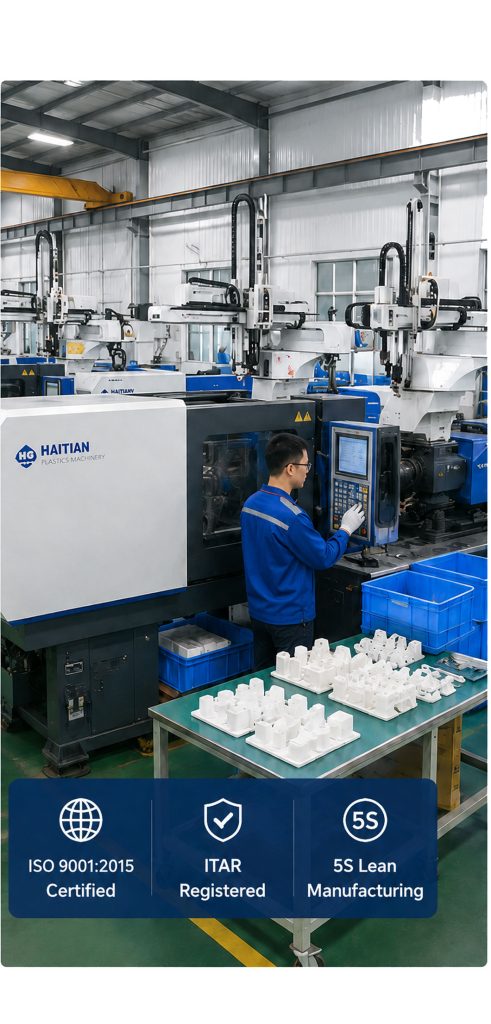
- Molding Equipment: Standard injection molding machines can be used with some modifications to handle the abrasive nature of carbon fibers and ensure proper mixing and distribution within the polymer matrix.
- Processing Conditions: Parameters like temperature, pressure, and cooling rates need to be optimized to ensure the integrity of the carbon fibers and the quality of the final part.
- Tooling: The molds need to be designed to withstand the abrasive nature of carbon fibers, often requiring the use of harder materials or coatings to reduce wear and tear.
Applications
- Automotive Industry: Used in components such as brackets, housings, and structural parts to reduce weight and improve fuel efficiency.
- Aerospace: Utilized in lightweight yet strong components, contributing to overall weight reduction and fuel savings.
- Consumer Electronics: Employed in cases and structural parts for devices that require a combination of strength, durability, and lightweight properties.
- Sports Equipment: Used in high-performance sports gear like bicycle frames, golf clubs, and tennis rackets for enhanced performance.
Challenges
- Cost: Carbon fiber materials are generally more expensive than traditional materials, which can be a limiting factor for some applications.
- Wear and Tear on Equipment: The abrasive nature of carbon fibers can cause increased wear on molds and machinery, requiring more frequent maintenance and potential replacements.
[elementor-template id=”4330″]
Sources for Further Reading
- Plastics Technology: Injection Molding with Carbon Fiber
- Composites World: Carbon Fiber Composites
- ResearchGate: Processing and Applications of Carbon Fiber-Reinforced Thermoplastics
These sources provide comprehensive information on the use of carbon fiber in injection molding, detailing the benefits, challenges, and applications of CFRP in various industries.
Related Conten: Plastic Assembly Decoration