PP vs HDPE Outdoor
Chairs: Which Material Is Better?
When comparing PP vs HDPE outdoor chairs,
the better choice depends on the target market, outdoor exposure, service life expectation, product structure,
and project budget. Both PP and HDPE are common thermoplastic polyolefins used in outdoor seating, but their
performance differs significantly in impact resistance, weather durability, molding behavior, and lifecycle
cost.
For OEM furniture brands, procurement teams, and product engineers, this decision should
not be based only on resin price. A lightweight polypropylene chair may be suitable for cafés, events, and
budget-sensitive programs, while HDPE may be more appropriate for seaside resorts, public parks, poolside
seating, and long-life commercial outdoor furniture.
PP and HDPE: Two Common Materials for Outdoor Chairs
PP, or polypropylene, is valued for its low density, stiffness, processability,
and cost control. Polypropylene outdoor chairs are often lighter, easier to move, and suitable for
high-volume production where handling efficiency and initial cost matter.
HDPE, or high-density polyethylene, is denser, tougher, and more durable in many
outdoor environments. It offers stronger impact performance, better moisture resistance, and a more
solid feel, which makes it a strong option for long-term outdoor seating projects.

For OEM projects involving one-piece chairs, stackable chairs, or large seating parts,
material selection should be reviewed together with mold structure, shrinkage compensation, cooling design, and
production volume. DTG’s plastic chair injection
mold manufacturing capability supports early material and moldability review.
Molecular Structure and Basic Performance Differences
The difference between PP and HDPE begins at the molecular level. PP has a more regular
chain structure that gives it higher stiffness and good heat resistance. HDPE has a linear molecular structure
with high crystallinity, which contributes to stronger toughness, impact resistance, environmental stress crack
resistance, and a heavier, more solid feel.
| Factor | PP Outdoor Chairs | HDPE Outdoor Chairs |
|---|---|---|
| Material family | Thermoplastic polyolefin | Thermoplastic polyolefin |
| Density | Lower, typically around 0.89–0.91 g/cm³ | Higher, typically around 0.941–0.965 g/cm³ |
| General feel | Lighter and more rigid | Heavier, tougher, and more solid |
| Heat behavior | Higher melting point and good heat resistance | Lower heat resistance than PP, but strong outdoor toughness |
Strength and Flexibility Comparison
Impact Resistance
HDPE generally offers stronger impact resistance than PP. Under impact, HDPE tends to
deform and absorb energy rather than fail in a brittle manner. This is important for outdoor chairs used in
schools, parks, public spaces, rental programs, and high-traffic commercial environments.
PP can still perform well when impact-modified or reinforced, but standard PP is more
sensitive to stress concentration, especially at chair-leg roots, backrest transitions, and rib
intersections.
Low-Temperature Toughness
HDPE performs better in cold outdoor environments. It maintains useful toughness at
lower temperatures, while PP becomes more brittle as temperature drops. For northern markets, high-altitude
areas, winter storage, or outdoor municipal seating, this difference can affect long-term safety and
durability.
Rigidity and Dimensional Stability
PP has higher stiffness and better heat resistance, which can help with dimensional
control and fine surface details. HDPE is more flexible and tougher, but its shrinkage behavior requires careful
mold compensation. For complex textures, thin details, or tight stackability requirements, PP may be easier to
control; for heavy-duty outdoor durability, HDPE is often more stable over the full service life.
Weather Resistance and Outdoor Durability
UV Resistance
Unmodified PP has limited UV resistance. Without UV absorbers, HALS light stabilizers,
antioxidants, and suitable color masterbatch, PP can fade, chalk, crack, and lose toughness after outdoor
exposure. UV-stabilized PP can be used for commercial outdoor chairs, but it should be specified clearly during
material selection.
HDPE has a denser molecular structure and generally performs better under long-term
outdoor exposure when paired with a proper UV package. For high-UV regions, poolside seating, seaside furniture,
and long-life public seating, HDPE usually provides stronger weather durability.
Temperature and Climate Resistance
PP offers stronger heat resistance, which can be useful in hot climates and applications
where dimensional stability under higher temperature is important. HDPE offers better cold-weather toughness,
making it suitable for wider seasonal temperature swings. Both materials require proper additive systems for
commercial outdoor use.
Saltwater, Moisture, and Chemical Resistance
HDPE is usually preferred for seaside, poolside, and high-moisture environments because
of its strong water resistance and salt spray tolerance. PP also has good chemical resistance and is practical
for restaurant patios where chairs may contact cleaning agents, oil, food residue, and beverages. The correct
choice depends on the actual exposure environment.
Cost and Manufacturing Considerations
Material Cost and Long-Term Cost
PP usually has a lower initial material cost than HDPE, which makes it attractive for
high-volume and budget-sensitive chair projects. However, for harsh outdoor environments, HDPE can provide
better total cost of ownership if its longer service life reduces replacement frequency, maintenance effort, and
warranty risk.
Injection Molding Behavior
PP generally flows well and is suitable for complex forms, fine textures, and thin-wall
structures. HDPE requires closer attention to shrinkage, cooling balance, and warpage control. Mold design
should account for resin-specific behavior rather than treating PP and HDPE as interchangeable materials.
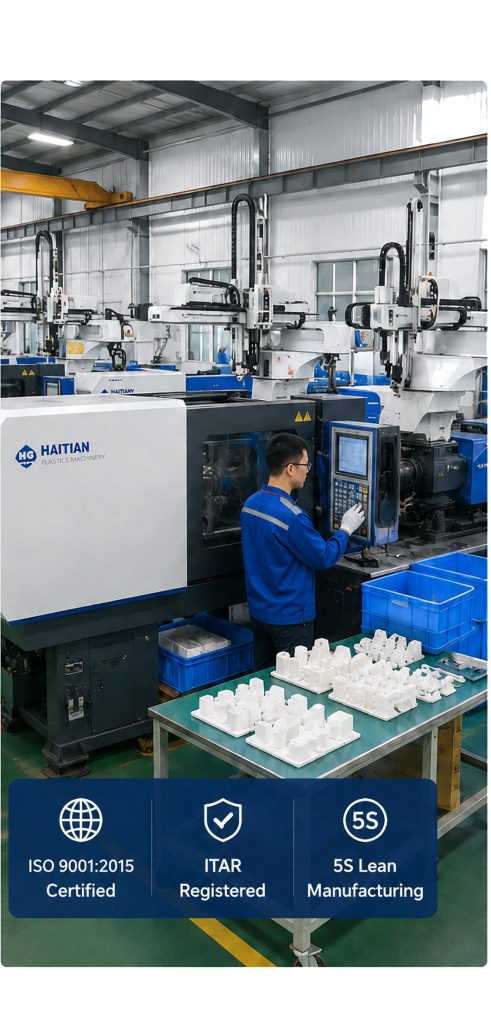
For chair OEM programs, DTG reviews material selection together with mold structure,
gate layout, cooling design, and part geometry through mold
design and DFM support.
Sustainability and Recyclability
Both PP and HDPE are recyclable, depending on local systems and formulation. HDPE has
especially strong sustainability appeal in Europe and North America, where recycled HDPE outdoor furniture can
support environmental positioning. For government, hospitality, and public-space procurement, this can become a
meaningful commercial advantage.
PP vs HDPE Quick Comparison
| Factor | PP Outdoor Chairs | HDPE Outdoor Chairs |
|---|---|---|
| Weight | Lighter and easier to move | Heavier and more solid |
| Initial cost | Lower | Higher |
| Impact resistance | Good with modification | Stronger for heavy-duty use |
| Low-temperature performance | Weaker in cold environments | Better cold-weather toughness |
| UV resistance | Requires UV stabilizers | Generally stronger with UV package |
| Design detail | Better for fine textures and detailed shapes | Requires more shrinkage control |
| Best use | Cafés, events, patios, schools | Resorts, seaside, parks, public spaces |

Commercial Outdoor Applications
PP and HDPE each have strong application areas. The goal is not to declare one
material universally better, but to match the material to the environment, product life target, handling
requirements, and brand position.
For B2B buyers, this application fit is often more important than a generic material
ranking.
Restaurants and Cafés
PP is often preferred for restaurants and cafés because it is lightweight, easy to
clean, cost-effective, and available in a wide range of colors. These environments usually involve frequent
handling, cleaning, and layout changes.
Hotels and Resorts
HDPE is more suitable for hotels and resorts where long-term durability, surface feel,
and outdoor appearance are important. It supports a more solid seating experience and stronger weather
performance.
Public Spaces and Municipal Projects
HDPE is usually the stronger choice for parks, schools, stations, and municipal outdoor
areas. These spaces require low maintenance, high impact resistance, safety, and long service life.
Event Rental and Temporary Seating
PP is suitable for rental and temporary seating because it is lightweight, stackable,
and economical to replace when heavy use causes wear. For short-term or flexible inventory programs, PP often
provides better operational efficiency.
Seaside and High-UV Areas
HDPE is strongly recommended for seaside, poolside, high-altitude, and high-UV
environments. Salt spray, chlorine, moisture, and intense sunlight can accelerate material aging, making HDPE’s
weather resistance and toughness more valuable.
Which Material Should You Choose?
Choose PP If…
- The project has strict initial cost targets.
- The chairs need to be moved, stacked, transported, or stored frequently.
- The outdoor environment is moderate rather than extreme.
- The design requires fine surface textures, bright colors, or complex details.
- The application is short-term, seasonal, or rental-based.
Choose HDPE If…
- The target service life is long and replacement cost matters.
- The chair will stay outdoors for extended periods.
- The environment includes salt spray, poolside moisture, strong UV, cold winters,
or large temperature swings. - The brand position requires a more solid feel and stronger durability message.
- Sustainability and recyclability are important for the target market.
Ask These Questions Before Final Selection
| Question | Why It Matters |
|---|---|
| What is the target service life? | Longer service life usually favors HDPE or higher weather-resistant formulations. |
| Will the chair be used near the sea or pool? | Salt, chlorine, and moisture increase the need for HDPE-level durability. |
| Is lightweight handling more important than long-term durability? |
Frequent moving and stacking often favor PP. |
| Is the project budget-sensitive? | PP usually supports stronger initial cost control. |
| Is the chair stackable, foldable, or fixed? | Slots, hinges, and load-bearing features affect toughness and dimensional requirements. |
Work with an OEM Outdoor Chair Manufacturer
A material decision should be connected to mold engineering. PP and HDPE require
different shrinkage compensation, cooling strategies, gate layouts, rib design, and process windows. An
experienced OEM partner should be able to review material selection, product structure, DFM risks, mold design,
injection molding stability, and lifecycle cost together.
DTG TECH supports outdoor plastic chair projects from material review and DFM to mold
manufacturing, sampling, modification, and batch injection molding. If your team is still comparing materials,
our previous article on outdoor plastic chair
materials provides a broader overview of PP, HDPE, ASA, and modified plastics.
For production planning after material selection, DTG also provides plastic injection
molding support for trial validation and batch manufacturing.
Need Help Choosing Between PP and HDPE?
Share your target market, outdoor environment, chair structure, expected service
life, and annual volume. DTG’s engineering team can review material fit, mold shrinkage compensation, and
production feasibility before tooling begins.
Contact
DTG for Material Selection and DFM Support
Conclusion: PP for Cost and Flexibility, HDPE for Long-Term Durability
PP and HDPE are both practical materials for outdoor chairs, but they serve different
commercial priorities. PP is a strong choice when lightweight handling, cost control, color flexibility, and
high-volume production are important. HDPE is a stronger choice when outdoor durability, cold-weather toughness,
saltwater resistance, and long lifecycle value are the main concerns.
For OEM buyers, the right material is the one that aligns with the use environment, service
life target, product structure, brand positioning, and manufacturing plan. By combining material selection with
DFM, mold engineering, and injection molding validation, outdoor chair projects can achieve better dimensional
stability, stronger durability, and more predictable lifecycle economics.