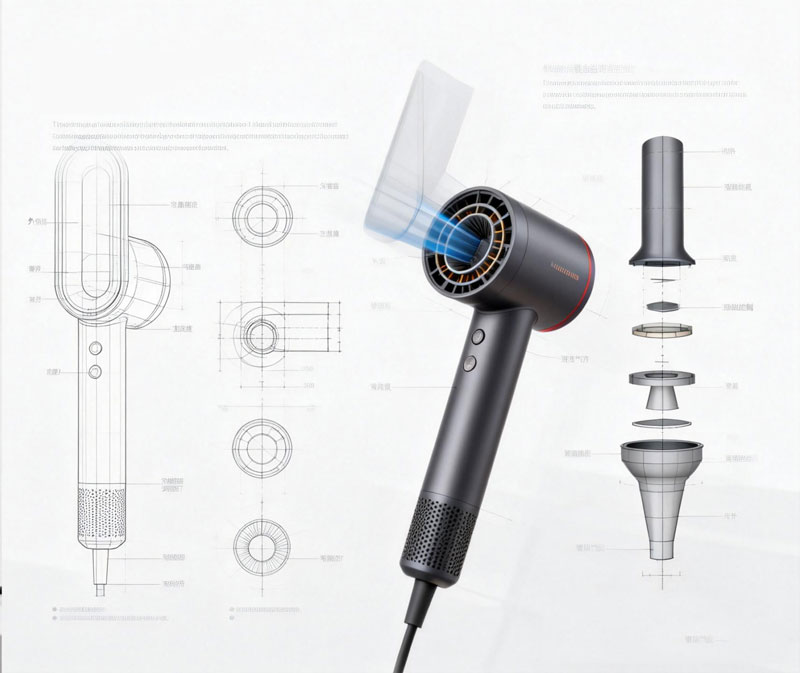
The bladeless hairdryer may appear to be a simple, aesthetically pleasing design at first glance, but in reality, it is a meticulously engineered system where form meets function. This product isn’t merely a “shell,” but a combination of the wind channel system and the brand’s design language, delivering an optimal user experience while maintaining high performance.
Product Overview: Beyond the Surface
Commonly misunderstood as an elegant shell, the bladeless hairdryer’s ring-shaped air outlet and integrated handle are in fact crucial elements of its industrial design. The ring-shaped head is not only a visual feature, but it also serves as the boundary for directing airflow, stabilizing air pressure, and reducing noise. The handle, which appears as a simple holding structure, actually houses the motor, electrical components, power cables, and thermal management system. This product’s premium feel isn’t achieved by superficial decoration, but by a logical design that integrates function with aesthetics. The combination of the circular ring and straight handle dictates not only the external appearance but also the structure, manufacturing processes, and costs.
User Experience: Intuitive Design for a Premium Feel
The reason the bladeless design has been embraced by the market lies in its ability to deliver an immediate sense of luxury and intuitive user experience:
Low Visual Understanding Cost: Users can immediately grasp how the airflow works, as the wind
flows evenly from the circular slit, creating a uniform and “technologically advanced” experience without
needing instructions.
Higher Expectations of Sensory Experience: The bladeless design creates a natural assumption
that the product is quieter, gentler, and more premium. Even if the actual performance doesn’t surpass
traditional dryers, the perceived value is instantly higher.
Professional Tool-like Feel: The higher positioning of the head and slender, restrained handle
give the product a professional tool-like appearance, which is crucial for positioning it as a high-end item.
Structural & Engineering Logic: Precision at Every Step
From an engineering standpoint, the bladeless hairdryer consists of four key systems that work in harmony to achieve the desired aesthetics and performance:
Ring-Shaped Air Outlet (Core Wind Channel): The outer ring isn’t merely decorative; it plays a
vital role in controlling the air gap, flow speed, and noise reduction. Precision here ensures consistent
airflow, minimizes whistling sounds, and maintains visual consistency.
Handle System (Motor and Thermal Management): The handle accommodates the high-speed motor,
electrical control board, buttons/touch structures, wiring, and thermal management systems. This design is
essential for keeping the device quiet and efficient, while also ensuring the safety and durability of the
components.
Connection & Assembly System: To maintain a clean and minimal aesthetic, fasteners and
structural joints are often hidden. This leads to the use of internal locking screws, snap fittings, and
ultrasonic welding or heat-melt pillars. However, these choices can complicate assembly and maintenance.
Human-Machine Interaction: In a competitive market, the differentiation often comes down to
subtle design details such as button type, ergonomic grip, and indicator light quality. These elements directly
contribute to the product’s premium feel and overall user experience.
Materials and Manufacturing Process: Achieving the Perfect Finish
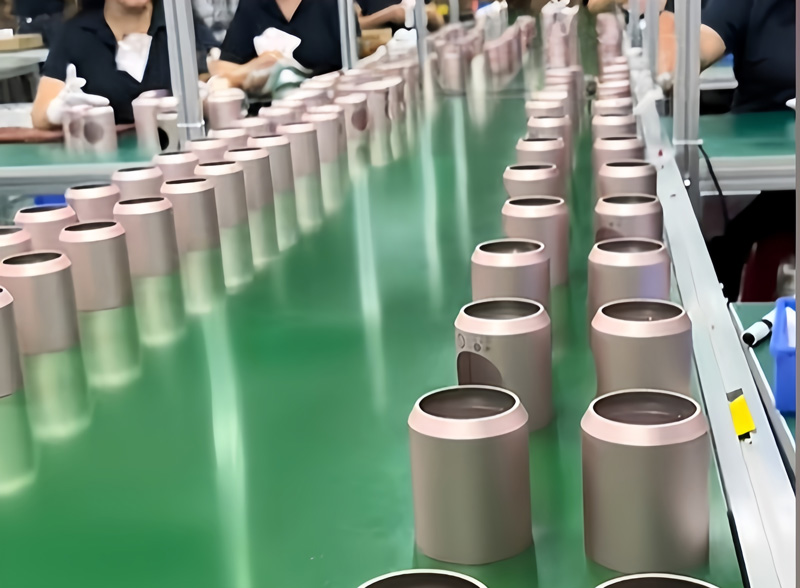
While the design may suggest a metallic finish, the actual production of the bladeless hairdryer primarily uses injection-molded plastics due to their cost-effectiveness, lightweight properties, and impact resistance:
Materials: PC/ABS plastics are ideal for their strength and aesthetic finish. ABS or PC may be
used in specific components, depending on the temperature and structural requirements.
Surface Finishing: The premium feel is often achieved through fine matte textures, which resist
fingerprints and enhance the visual appeal. Metallic paints or UV coatings are also used to create a cool,
refined look. However, achieving consistent quality with these finishes requires tight control over color
variation and scratch resistance.
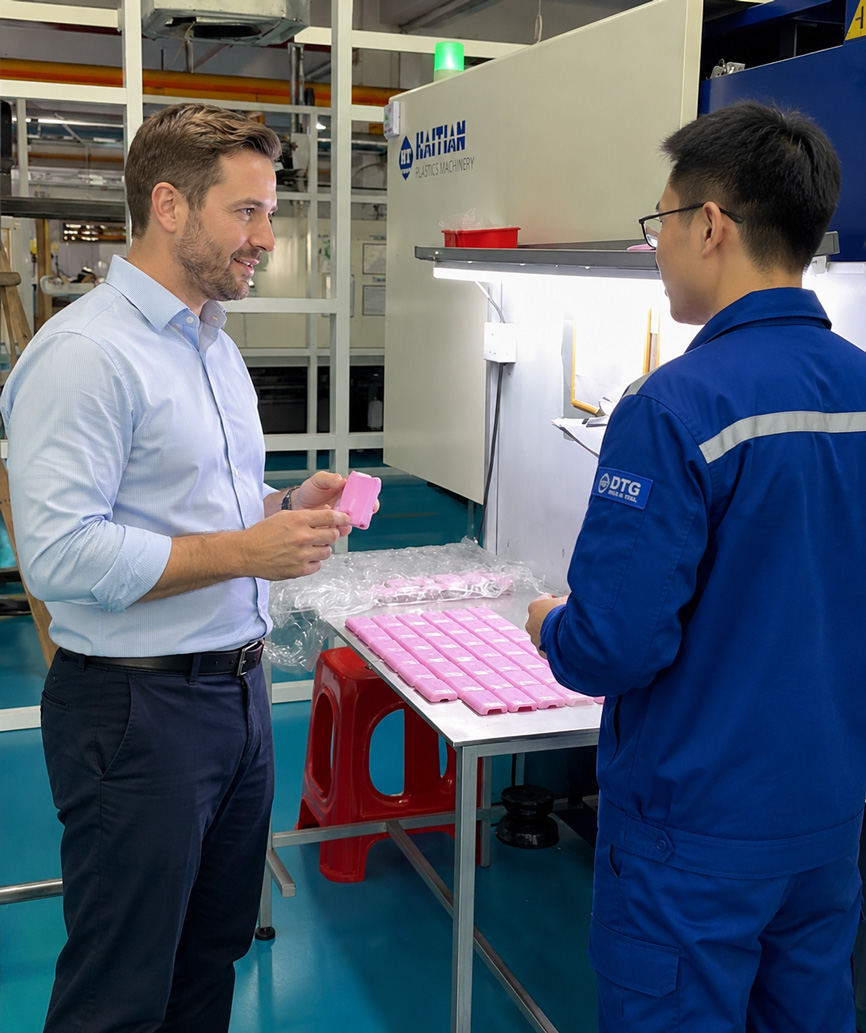
Molding and Forming: The ring-shaped parts are especially sensitive to molding conditions.
Small variations in wall thickness can lead to distortion or imperfections in the final product, making the mold
and injection process a key consideration in overall production quality.
Production Risks: Key Challenges to Address
While the concept for the bladeless hairdryer is straightforward, there are significant production risks that must be managed to ensure quality and scalability:
Wind Channel Tolerance Control: Any deviation in the gap around the ring can result in uneven
airflow or unwanted noise, undermining the user experience.
Thin-Walled Components and Risk of Deformation: Pursuing an ultra-thin design increases the
risk of deformation and shrinkage, making assembly more difficult and compromising the product’s visual and
functional quality.
Assembly Complexity: Hidden fasteners and clean aesthetics can lead to complex assembly
processes, impacting overall yield and repairability.
Cost Underestimation: The sleek design can lead to an underestimation of the production costs.
High-precision molds, stringent surface treatments, and initial yield issues can drive up the price of
manufacturing.
Homogenization Risk: The circular ring shape is becoming a recognizable feature, and without
differentiating elements, the product may end up competing solely on price.
Target Customers & Use Cases
The bladeless hairdryer design is ideal for businesses in the high-end consumer electronics market, specifically targeting companies that:
Are focused on professional-grade personal care devices
Seek to create quiet and efficient hairdryers with a modern aesthetic
Want to position their products in the premium market
Prioritize precision engineering and seamless integration of form and function
If you’re considering bringing this kind of design to your product line, or if you need help assessing its engineering feasibility, please
contact our engineering team for expert advice and a thorough consultation.
Ready To Start Your Project?
Tell us about your part, material, quantity, or mold requirements. Our team will review your project and provide a practical manufacturing solution.