
Two Shot Molding Services
Integrate two colors, two materials or two functional surfaces into one molded component with professional two shot mold design, precision tooling and production support from DTG TECH.
What Is Two Shot Molding?
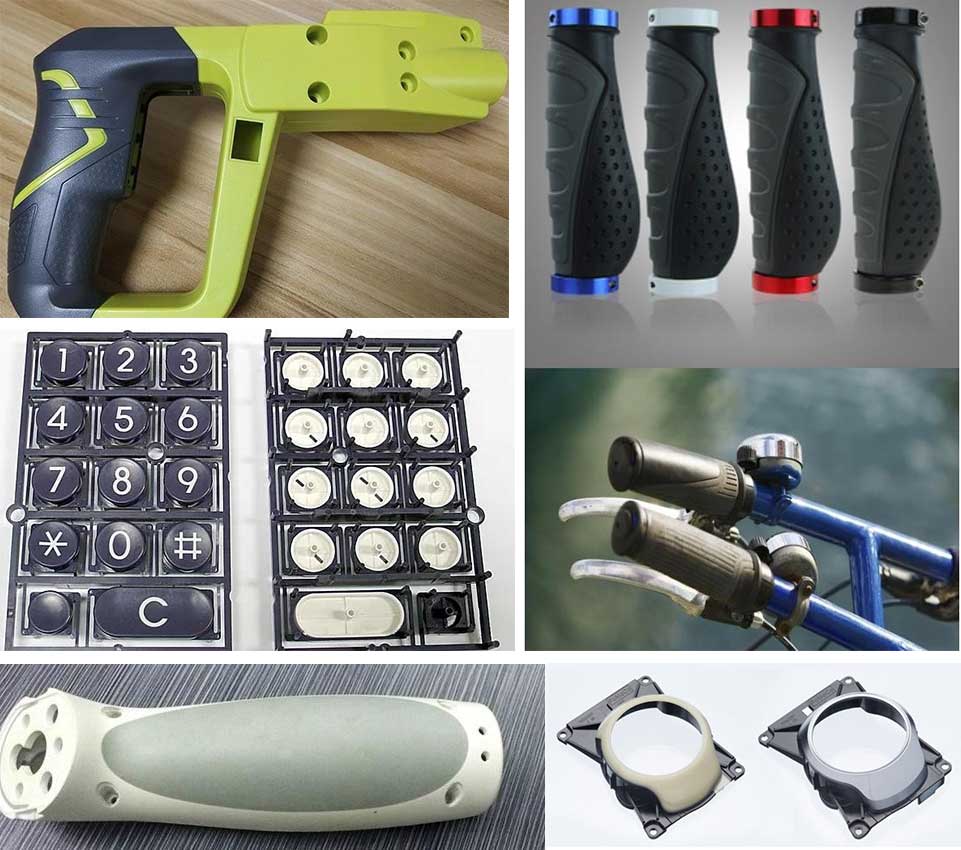
Two shot molding, also known as two shot injection molding, 2K molding or two component molding, is a process that combines two plastic materials, two colors or two functional regions into a single molded part.
In a typical rotary process, the first material is injected into the first cavity. The mold opens, the core or mold platen rotates, and the first-shot component moves into a second cavity. A second material is then injected around or against the first shot before the completed part is ejected.
This allows manufacturers to create integrated soft-touch areas, multi-color surfaces, sealing features, light-transmitting zones or other functional combinations without manually assembling separate plastic components.
The Two Shot Injection Molding Process
Two materials are molded in a controlled sequence inside a dedicated two shot molding system.
First Material Injection
The base material is injected into the first cavity to form the first-shot component.
Mold Opens
The part remains on the intended mold side rather than being fully ejected.
Core or Platen Rotates
The first-shot component is transferred into the second molding position.
Second Shot and Ejection
The second material is injected, cooled and ejected as one integrated molded part.
Benefits of Two Shot Molding
Integrated Functions
Combine rigid support, soft-touch surfaces, seals, buttons, light guides or visual accents in one component.
Reduced Assembly
Integrating two materials during molding can reduce manual placement, adhesive bonding and downstream assembly operations.
Improved Appearance
Create permanent multi-color details and cleaner material transitions without paint or printed decoration in suitable applications.
Better Ergonomics
Add grip zones, cushioning, anti-slip surfaces or tactile features to tools and handheld products.
Repeatable Production
Automated transfer between shots can support stable positioning and consistent production compared with manual part transfer.
Design Freedom
Use color contrast, transparency, flexible materials and mechanical interlocks to support complex product requirements.
Two Shot Molding vs. Overmolding
The two processes can create similar product functions, but their equipment, part transfer method, tooling and production economics are different.
| Comparison | Two Shot Molding | Transfer Overmolding |
|---|---|---|
| Equipment | Dedicated multi-material injection molding system | Often uses conventional injection molding equipment |
| Part Transfer | Transferred inside the molding system | Usually transferred manually or by automation between operations |
| Tooling | More integrated and typically more complex | May use separate tools or a simpler transfer approach |
| Automation | High potential for automated repeatable cycles | Depends on transfer and insert-handling method |
| Initial Investment | Usually higher due to machine and mold complexity | Can be more accessible for lower-volume applications |
| Best Fit | Repeat production, integrated features and cycle consistency | Lower volume, simpler geometry or flexible transfer-based production |
Two Shot Mold Design Is the Foundation of Stable Production
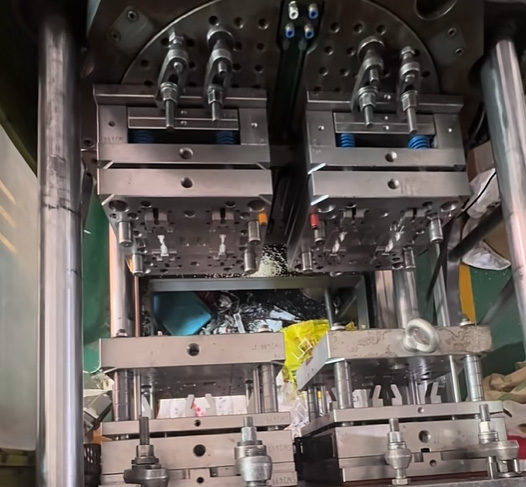
A successful two shot molding project depends on much more than the injection machine. The mold must control part retention, rotation, alignment, sealing, cooling, gate location and second-shot filling behavior as one coordinated system.
DTG supports the project from part evaluation and mold concept development through tool manufacturing, trial molding, correction and production validation.
Material Sequencing
Determine which resin should form the first shot and which should form the second shot.
Shut-Off Design
Control interface sealing to reduce flash, edge lifting and cosmetic defects.
Part Retention
Ensure the first-shot component stays on the intended mold side during transfer.
Cooling Balance
Coordinate cooling across both molding positions to improve dimensional stability.
Gate Strategy
Manage filling direction and injection force to protect the first molded section.
Rotary Alignment
Maintain accurate matching between molding positions after rotation or transfer.
Common Two Shot Mold Structures
The appropriate structure should be selected according to part size, interface geometry, machine configuration and production goals.
Rotary Core / Rotary Platen
A common arrangement in which the first-shot component rotates into the second molding position.
Core-Back Structure
A movable core creates new cavity space for the second material without rotating the entire mold side.
Index Plate / Transfer Plate
The molded section is transferred by a rotating or indexing plate between molding positions.
Sliding Core Structure
Core movement changes the molding space and can support larger or specially configured components.
Two Shot Mold Manufacturing at DTG
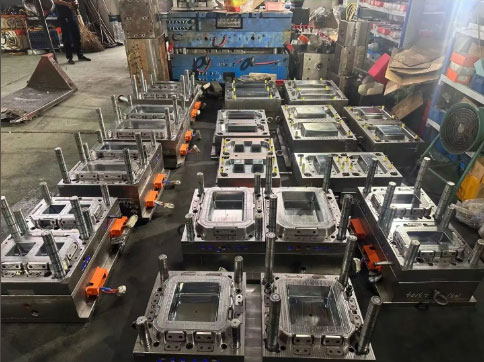
DTG combines mold design, machining, fitting, trial molding and correction in one coordinated workflow. This helps reduce communication gaps between the tooling and molding stages.
Material Compatibility for Two Shot Molding
Typical Material Combination Concepts
These are general concepts only. Final resin selection should be confirmed with material supplier data and molding trials.
Key Compatibility Checks
Two Shot Molding Design Guidelines
Early DFM review helps identify bonding, shut-off, warpage and transfer risks before the mold is manufactured.
Increase Bonding Area
Provide sufficient contact area between materials and avoid relying on a narrow cosmetic edge alone.
Use Mechanical Interlocks
Grooves, holes, undercuts or suitable surface texture can reinforce the interface when material adhesion is limited.
Control Wall Transitions
Maintain practical wall thickness and gradual transitions to reduce sink, distortion and uneven cooling.
Provide Proper Draft
Draft affects release, first-shot retention and the risk of scratching during the second mold-closing step.
Protect the First Shot
The second-shot flow and pressure should not displace, deform or wash the first molded section.
Plan Shut-Off Strength
Interface sealing areas must withstand molding pressure without creating flash, burrs or edge peeling.
Balance Cooling
Cooling layouts for both molding positions should support stable dimensions and consistent cycle performance.
Confirm Machine Interface
Mold dimensions, nozzle arrangement, rotation, ejection and water connections must match the selected machine.
Common Defects to Prevent
- Weak bonding or peeling between materials
- Flash and burrs at the material interface
- First-shot movement or deformation
- Scratching during mold closing
- Warpage caused by shrinkage differences
- Visible flow marks or poor cosmetic transition
What We Review During DFM
- Part geometry and molding sequence
- Material compatibility and interface design
- Gate, venting and cooling strategy
- Part retention and ejection method
- Cosmetic surfaces and sealing areas
- Tooling risks before mold manufacturing
Is Two Shot Molding Right for Your Project?
The best process depends on part function, material behavior, production volume and tooling budget.
Often a Good Fit
Another Process May Be Better
Where Two Shot Molding Is Used
Two shot molding is widely used where multiple colors, textures, materials or functions must be integrated into a single plastic component.
Automotive
Switches, control surfaces, seals, decorative interfaces and tactile components.
Electronics
Buttons, housings, light-transmitting features and multi-color interfaces.
Medical
Ergonomic grips, sealed interfaces and components requiring clear material separation.
Power Tools
Soft-touch handles, anti-slip areas and vibration-control surfaces.
Home Appliances
Controls, handles, decorative zones and integrated tactile features.
Consumer Products
Multi-color products, soft-touch areas, toys, stationery and lifestyle components.
From RFQ to Two Shot Molding Production
DTG supports design review, mold manufacturing, trial molding, correction and production within one coordinated project flow.
One Partner for Mold Design, Tooling and Injection Molding
Two shot molding projects require close coordination between product design, material selection, mold engineering and process development. DTG brings these stages together to support smoother project execution and faster technical communication.
Two Shot Molding FAQs
What is two shot molding?
Is two shot molding the same as overmolding?
What materials can be used in two shot molding?
Which material is molded first?
How can weak bonding between materials be prevented?
Is two shot molding suitable for low-volume production?
What information is required for a quotation?
Can DTG support both mold making and mass production?
Need a Two Shot Mold or Two Shot Molding Quote?
Send us your CAD files, material requirements, estimated volume, surface requirements and application details. Our team will review the project and discuss a practical manufacturing approach.
Include These Details
- 3D CAD and 2D drawing
- Material or hardness target
- Annual or order quantity
- Color and cosmetic requirements
- Product testing requirements