
Your professional partner for Industrial 3D Printing Servers in China
On-demand 3D printing for rapid prototyping and production in as fast as 1 day.
Custom Parts – Industrial 3D Printing Servers
At DTG Mold , we offer unparalleled expertise in plastic molding materials thDTG 3D provides industrial 3D printing services in China, using advanced technologies powered by proprietary software and automated hardware. We produce high-quality parts in multiple materials and automotive-grade finishes, ensuring precision and durability. Our expertise supports scalable on-demand production, from a single prototype to thousands of parts within days, helping clients accelerate product development and respond quickly to market needs. By combining digital workflows, innovative design, and precision engineering, DTG 3D enables fast, reliable, and cost-effective manufacturing across industries including automotive, electronics, medical devices, and consumer products.
1 Piece Can Be 3D Printed, No Minimum Quantity Required.
Certifications: ISO 9001:2015 | AS9100D | ITAR Registered
On-Demand Industrial 3D Printing Services
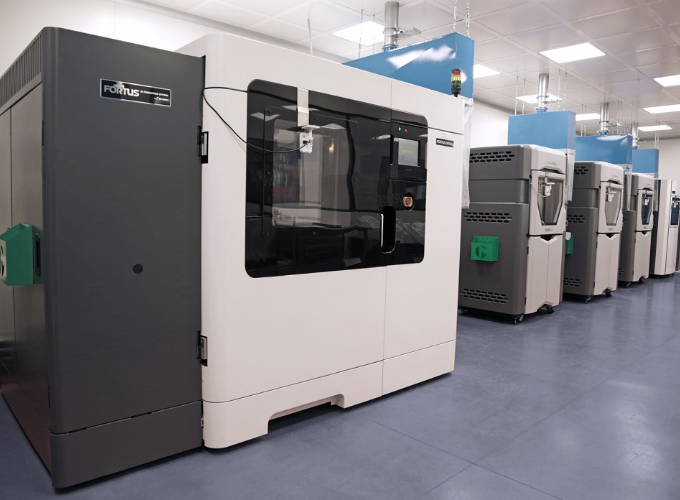
Our online 3D printing service allows you to produce custom parts on demand using six advanced 3D printing technologies. We can transform your 3D files into high-quality plastic, metal, and elastomeric parts. With over 120 3D printers, we offer unmatched capacity to reliably deliver parts within days.We provide a wide selection of materials and multiple post-processing options to enhance both appearance and mechanical performance.No mold is required and there is no minimum order quantity. Skip expensive tooling and setup costs, and manufacture from 1 to 1,000 functional parts on demand. Larger quantities can save up to 70% when 3D printing with us.
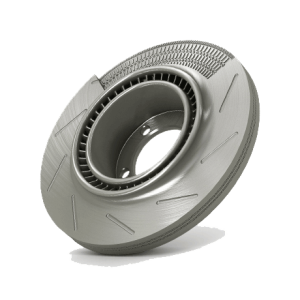
Direct metal laser sintering (DMLS) uses a fiber laser system that draws onto a surface of atomized metal powder, welding the powder into fully dense metal parts.
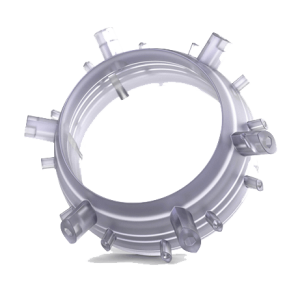
The most common 3D printing materials are ABS, PLA, and their various blends. More advanced FDM printers can also print with other specialized materials that offer properties like higher heat resistance, impact resistance, chemical resistance, and rigidity.
World Class 3D Printing Services
Commitment to quality is important to us. We ensure that our manufactured parts are consistently top class, genuine and certified for the most demanding end use applications by collaborating with the best in class original equipment manufacturers and utilising only oem certified materials. Our 3D Printing services passed stringent quality management systems and are accredited with ISO 9001: 2015 certified by TÜV Rheinland.
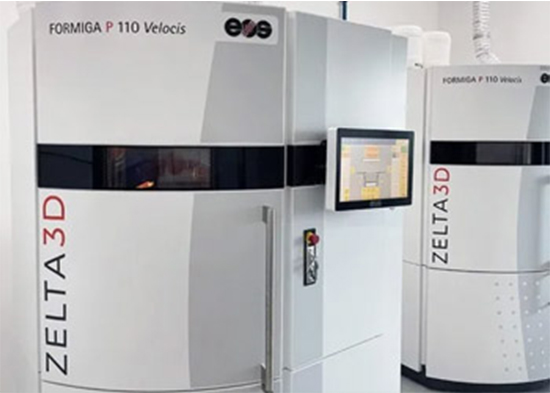
EOS SLS PERFORMANCE
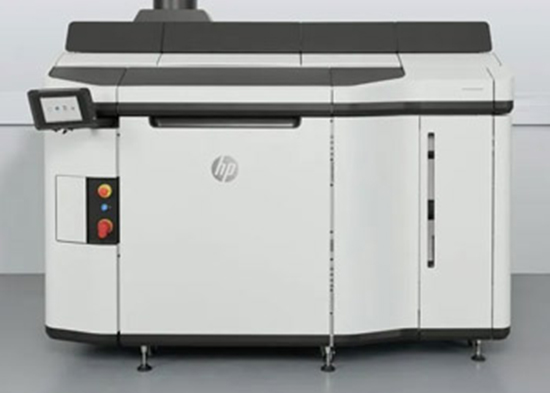
HP MJF 5200
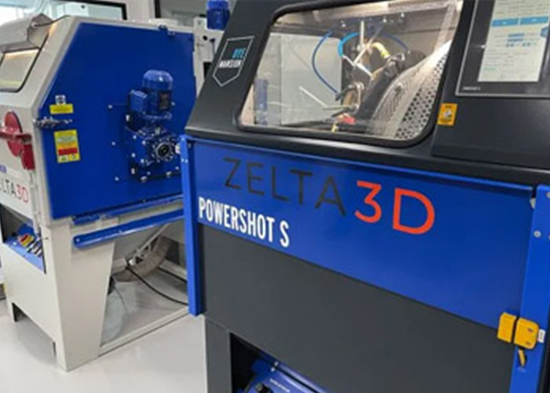
3D ZELTAPrinting
3D Printing Materials
DTG is proud to hold the ISO 9001:2015 certification, an internationally recognized quality management standard. TDL factory is also: IATF16949:2016 certified, ISO 13485:2016 certified.
Plastic 3D Printing Materials
ABS is an all-purpose material that offers smooth surface finishes, impact resistance, and durability. We offer a variety of ABS-like plastics:
- Accura Xtreme White 200
- Accura Xtreme Gray
- Accura 7820
- WaterShed XC 11122
- MicroFine
- Carbon RPU 70
We offer multiple grades of nylons through our selective laser sintering (SLS) and Multi Jet Fusion (MJF) 3D printing processes. These powdered thermoplastic materials build durable parts with mechanical properties suitable for functional prototyping and end-use:
- PA 12 White
- PA 11 Black
- PA 12 Black
- PA 12 Mineral-Filled
- PA 12 40% Glass-Filled
- PA 12 40% Glass-Filled Black
Polycarbonate is a versatile material choice that stiff parts with excellent heat deflection. Multiple polycarbonate-like materials are available through our stereolithography (SLA) process:
- Accura 60
- Accura 5530
- PerFORM (Ceramic-like Advanced High Temp)
3D-printed polypropylene is a lightweight material with flexibility, durability, and chemical resistance.
- Polypropylene Natural
- Somos 9120 (PP-like Translucent White)
- Carbon FPU 50
Silicone is a flexible, biocompatible, and heat-resistant material ideal for applications requiring elasticity and precision. It’s commonly used for seals, gaskets, medical prototypes, and parts exposed to temperature fluctuations.We provide a range of silicone and silicone-like materials through advanced additive manufacturing and molding processes:
- True Silicone Rubber (LSR)
- Silicone-Like Translucent
- Elastomeric Polyurethane (Flexible 80A)
- Biocompatible Silicone for Medical Prototypes
TPU (Thermoplastic Polyurethane) combines the flexibility of rubber with the strength and durability of plastic. It delivers exceptional wear resistance, impact absorption, and elasticity, making it suitable for flexible joints, enclosures, and consumer products.
Available TPU materials include:
- Ultrasint TPU 01 (Flexible MJF Powder)
- BASF Ultrasint TPU 88A
- Carbon EPU 40
- EPU 41 (Elastomeric Polyurethane)
Digital Photopolymers are UV-cured resin materials designed for high-precision and high-detail parts. They provide a broad range of mechanical and optical properties, suitable for visual models, functional prototypes, and master patterns for molding.
We offer multiple photopolymer options for SLA and DLP printing:
- Accura ClearVue (Transparent, High Clarity)
- Accura Bluestone (High Temperature Resistance)
- Somos EvoLVe 128 (Durable, ABS-like Performance)
- Rigid Resin (Stiff and Smooth Surface Finish)
- Tough 2000 Resin (Impact Resistant)
Metal 3D Printing Materials
Known as a “workhorse” alloy, titanium is a lightweight metal with high strength and excellent corrosion resistance. All final titanium parts receive vacuum stress relief application.
3D-printed cobalt chrome offers a high strength-to-weight ratio and excellent creep and corrosion resistance.
A high strength, corrosion resistant nickel chromium superalloy. Inconel 718 comes in different three resolutions and can receive different post-processing treatments.
3D-printed stainless steel is a corrosion resistant metal with high hardness and strength. We offer two grades of stainless steel for 3D printing:
- Stainless Steel 17-4 PH
- Stainless Steel 316L
Known as a “workhorse” alloy, titanium is a lightweight metal with high strength and excellent corrosion resistance. All final titanium parts receive vacuum stress relief application.
Why Choose DTG for Custom Injection Molding Services?
Combining engineering expertise, advanced manufacturing, and rigorous quality control to support your project from concept to production.
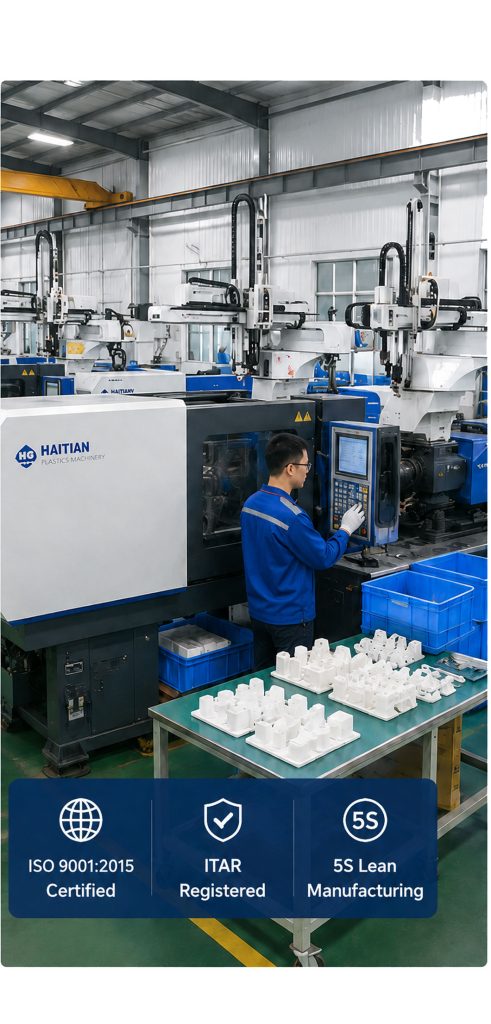

ISO 9001:2015 Certified
Our ISO 9001:2015 quality management system supports consistent processes from material inspection and molding to final inspection and shipment, helping ensure reliable and repeatable quality throughout production.
Advanced Manufacturing Equipment
Our modern injection molding equipment supports a wide range of part sizes, materials, and production volumes. Process control and inspection equipment help us maintain consistent quality from initial samples through full-scale production.

Engineering & DFM Support
Our engineering team provides DFM feedback, material selection support, and mold design recommendations before production, helping identify potential manufacturing issues early and reduce unnecessary tooling changes, delays, and costs.

Fast Lead Times
With coordinated engineering, tooling, and injection molding production, we streamline each stage from DFM review to mold trials and production, helping customers shorten development cycles and keep projects on schedule.

Injection Molding Expertise
Our team supports injection molding projects with complex geometries, tight tolerances, demanding cosmetic requirements, and a wide range of engineering plastics—from prototype development to repeat production.

Responsive Project Support
From quotation and DFM review through tooling, sampling, production, and delivery, our team keeps communication clear and responsive. Engineering questions, design changes, and production updates are handled quickly to keep your project moving.
Our Mold Design Process
From initial DFM review to mold validation, every step is engineered to reduce risk and prepare your tooling for reliable production.

Requirement Review
Understand part geometry, material, tolerance, volume, and project goals.

DFM & Concept Design
Evaluate manufacturability and develop the initial mold concept.

Detailed Mold Design
Complete 3D mold design including parting lines, gating, cooling, and ejection.

Mold Flow & Design Analysis
Review filling, cooling, warpage, and other potential molding risks before tooling.

Design Review & Approval
Review the mold design with the customer and confirm final requirements.

Tool Manufacturing
Manufacture mold components and complete assembly according to the approved design.

Mold Trial & Validation
Perform T0/T1 trials, inspect molded parts, and optimize the mold where necessary.

Production Release
Approve the mold for production and transfer it into stable injection molding.