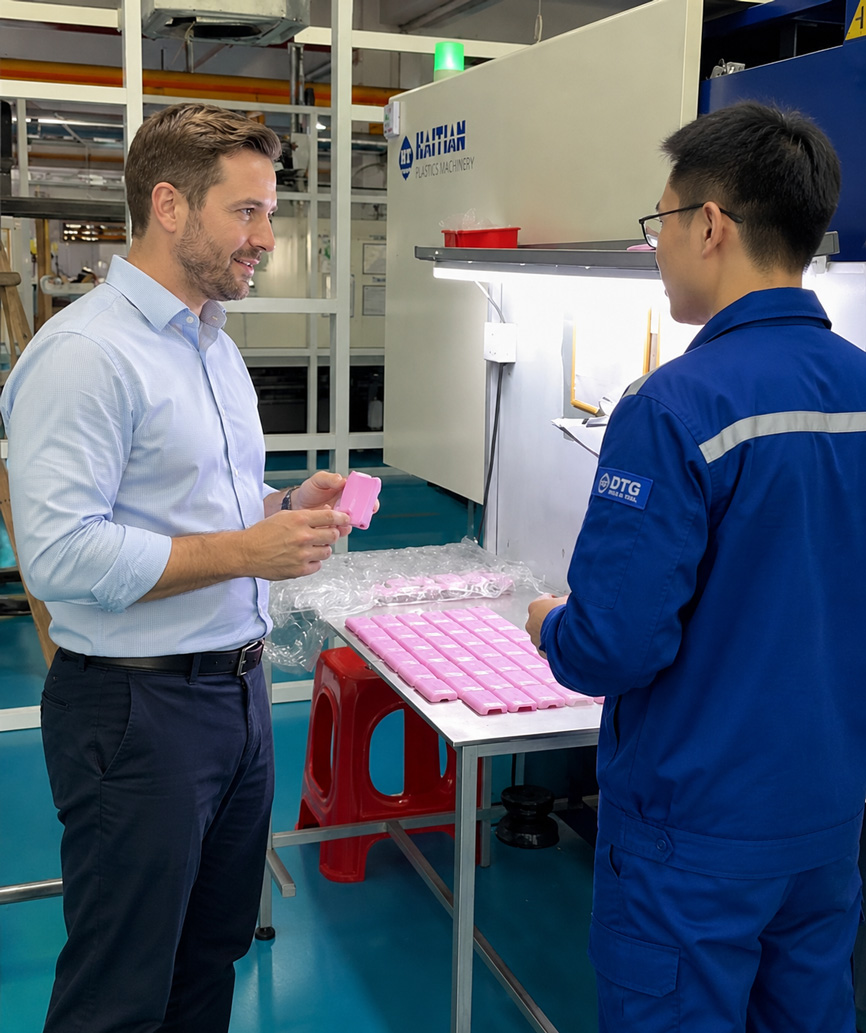
Voice Interaction Device Housing Manufacturing
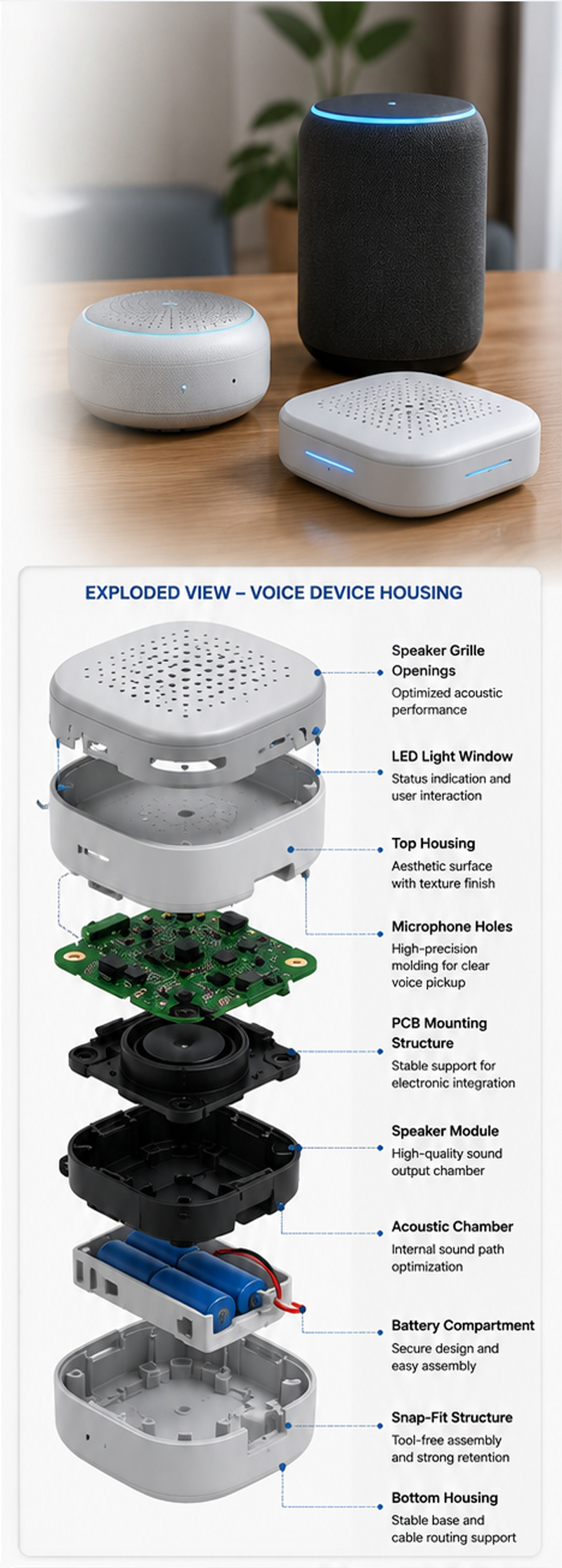
Voice Interaction Device Structures We Support
This is not a voice device product catalog. It is an acoustic structure and plastic housing capability showcase for voice AI devices, smart speakers, AI companion products, IoT voice control devices, and consumer electronics enclosures.
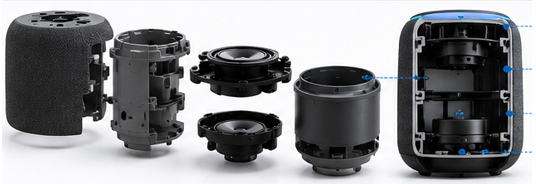
Smart Speaker Housing
- Acoustic chamber structures
- Speaker grille openings
- Hidden assembly design
- LED light windows
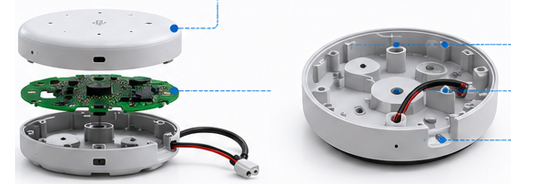
Voice Assistant Device Enclosure
- Microphone hole structures
- Compact PCB integration
- Cable routing optimization
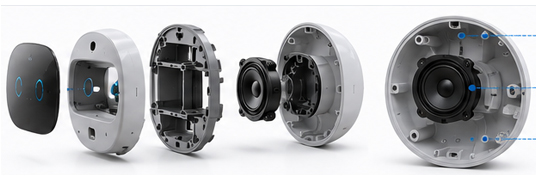
AI Companion Device Housing
- Curved appearance surfaces
- Integrated speaker areas
- Internal mounting structures
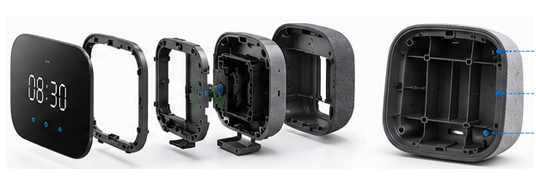
Desktop Voice Interaction Device
- Premium cosmetic finish
- Multi-part assembly
- Sound transmission optimization
Acoustic Structural Design for Voice Interaction Devices
Voice interaction devices require precise coordination between acoustic structures, electronic components, and injection molding manufacturability.
Poor enclosure design can negatively affect sound quality, microphone sensitivity, heat dissipation, assembly efficiency, and cosmetic appearance. DTG TECH helps optimize acoustic plastic structures for scalable production and stable product performance.
Speaker Opening Design
Key considerations include:
- Sound transmission efficiency
- Grille opening consistency
- Cosmetic appearance
- Injection molding feasibility
- Small-hole molding precision
Microphone Hole Structures
Optimized for:
- Accurate voice pickup
- Hidden acoustic pathways
- Precision micro-hole molding
- Dust protection considerations
Internal Acoustic Chambers
Supporting:
- Speaker performance
- Resonance control
- Vibration reduction
- Structural stability
Heat Dissipation Areas
Important for:
- AI processing modules
- Speaker thermal management
- Long-term product reliability
Internal PCB Mounting Structures
Including:
- Screw bosses
- Snap-fit supports
- Tolerance control
- Wiring layout optimization
Common Manufacturing Problems in Voice Device Housings
Many voice interaction device projects encounter acoustic and production issues when moving from prototype validation to mass manufacturing.
- Inconsistent speaker grille openings
- Microphone holes blocked by flash or deformation
- Poor fit between acoustic chambers and electronic modules
- Warpage on curved or glossy cosmetic surfaces
- Sink marks around screw bosses and internal mounts
- Vibration noise caused by weak housing structures
- Heat buildup around AI processing modules
- Assembly interference between PCB, speaker, wiring, and plastic parts
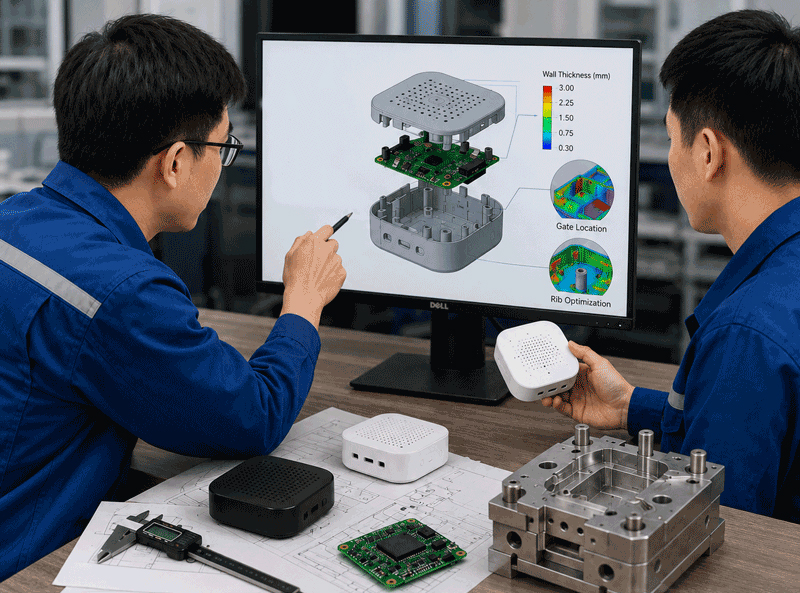
DTG TECH helps customers identify and solve these issues through DFM analysis, moldflow simulation, acoustic structure review, and production-oriented enclosure optimization.
Get Manufacturing Recommendations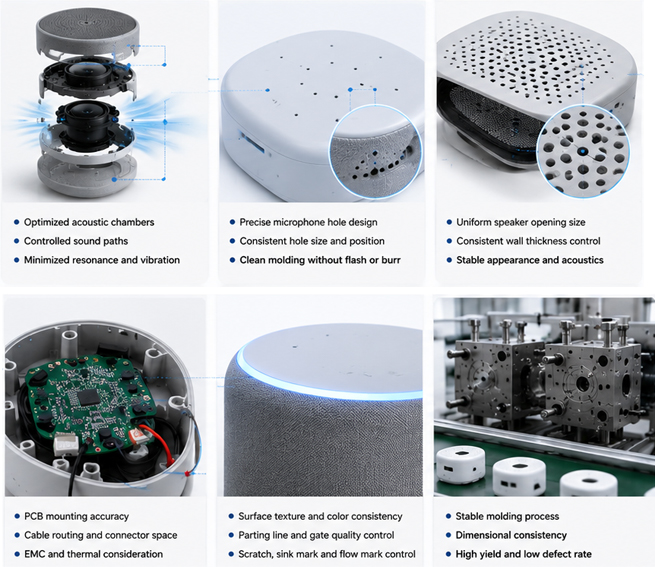
Acoustic and Production Risk Control
The focus is not to display finished voice products. The focus is to show that DTG TECH understands acoustic enclosure structure, microphone hole molding, speaker opening consistency, electronic integration, cosmetic quality, and injection molding stability.
Voice Device Mold Manufacturing and Injection Molding
DTG TECH provides complete mold manufacturing and injection molding services for voice interaction device housings, smart speaker enclosures, and acoustic plastic components.
Manufacturing Capabilities
- Mold design and DFM analysis
- Moldflow simulation
- High-precision mold manufacturing
- Injection molding production
- Speaker grille and small-hole molding
- Insert molding
- Overmolding
- Texture and cosmetic finishing
- Pilot production and mass production
Voice Device Project Requirements
- Acoustic performance
- Microphone hole precision
- Speaker opening consistency
- Cosmetic-grade appearance
- Tight tolerance assembly
- Electronic integration
Injection Molding Capacity
- 80T–1300T injection molding machines
- Prototype to mass production
- OEM and ODM manufacturing support
Materials for Voice Interaction Device Housings
ABS
Cost-effective material with good surface finish for general voice device housings.
PC/ABS
Improved impact resistance and premium appearance for consumer electronics enclosures.
Flame-Retardant PC
Suitable for electronic safety requirements and AI-enabled smart hardware products.
Transparent PC
Used for LED light windows, status indicators, and light transmission areas.
TPE Overmolding
Used for soft-touch areas, anti-slip bases, vibration damping, and user interaction surfaces.
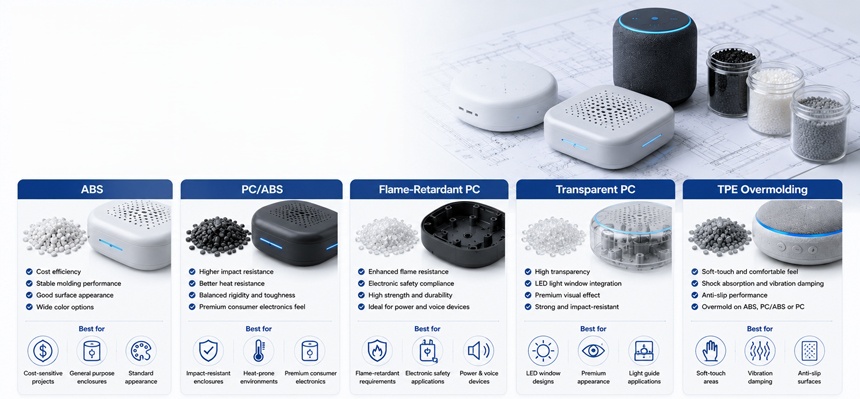
Material Selection Guidance
Choose ABS when cost efficiency, stable molding, and good surface appearance are the main priorities.
Choose PC/ABS or flame-retardant PC when the enclosure requires higher impact resistance, electronic safety, or a premium consumer electronics feel.
Choose transparent PC or TPE overmolding when LED windows, soft-touch areas, vibration damping, or anti-slip design is required.
Prototype to Mass Production Support
DTG TECH supports the complete development cycle for voice interaction devices and smart speaker housing projects.
Appearance Prototypes
Verify enclosure shape, cosmetic finish, speaker grille appearance, LED windows, and visible surfaces before tooling.
Functional Prototypes
Check microphone hole positions, speaker chamber layout, PCB fit, cable routing, thermal space, and assembly sequence.
CNC Machining
Support precise prototype housings for acoustic testing, structural verification, and internal component fitting.
3D Printing
Support fast iteration for enclosure shape, acoustic path layout, electronics fit, and assembly design.
Low-Volume Pilot Production
Support pilot builds for acoustic validation, engineering testing, market samples, and launch preparation.
Mold Manufacturing
Develop production molds with DFM review, moldflow analysis, and acoustic structure optimization.
Injection Molding
Produce voice device housings with stable dimensions, cosmetic quality, and consistent small-hole molding performance.
Assembly Coordination
Coordinate housings with PCB, speakers, microphones, LEDs, wiring, batteries, sensors, and module integration requirements.
We help voice AI hardware teams accelerate product commercialization while reducing tooling, acoustic, and production risks.
Why DTG TECH for Voice Device Housing Manufacturing
- 23+ years of mold engineering experience: Practical support from acoustic enclosure review to injection molding production.
- Consumer electronics housing expertise: Support for cosmetic surfaces, tight tolerance assembly, micro openings, speaker grilles, and internal mounting structures.
- Acoustic structure optimization: Speaker openings, microphone holes, acoustic chambers, and vibration control are considered before tooling.
- DFM optimization before tooling: Wall thickness, ribs, screw bosses, snap-fit structures, small-hole molding, and cosmetic surfaces are reviewed before mold manufacturing.
- High cosmetic surface quality control: Texture consistency, glossy appearance, parting line control, and visible surface quality are considered during mold and process planning.
- Flexible low-volume and mass production support: Prototype quantities, pilot runs, and scalable production can be supported according to project stage.
- Integrated electronics coordination support: Local electronics assembly coordination can support PCB, speaker, microphone, LED, sensor, and module integration.
- OEM manufacturing experience for global markets: Engineering communication and manufacturing support for smart hardware teams serving North America, Europe, and global consumer markets.
Engineering Communication and Acoustic Review
A project engineer can review your voice interaction device concept, 3D files, acoustic chamber layout, microphone position, speaker structure, internal electronic layout, material requirements, target quantity, and launch schedule.
This engineering-first review helps identify moldability risks, acoustic structure issues, heat buildup risks, assembly interference, cost drivers, and potential structural improvements before tooling investment.
Frequently Asked Questions
Can You Manufacture Voice Interaction Device Housings?
Yes. DTG TECH supports voice interaction device housing development from prototype to mold manufacturing and injection molding production.
Do You Manufacture Smart Speaker Housings?
Yes. We support smart speaker housing projects requiring acoustic openings, speaker grille structures, microphone holes, LED windows, and cosmetic plastic housings.
Can You Help Optimize Microphone Hole Structures?
Yes. Our engineering team can review microphone hole layout, molding feasibility, acoustic pickup requirements, and cosmetic surface quality before tooling.
What Materials Are Used for Voice Device Enclosures?
ABS, PC/ABS, flame-retardant PC, transparent PC, TPE, and engineering plastics are commonly used depending on product performance, appearance, and safety requirements.
Can You Support Low-Volume Production?
Yes. We support prototype quantities, pilot production, and scalable mass production according to project stage.
Do You Support Electronics Integration?
We coordinate with trusted electronics assembly partners for PCB, speaker, microphone, LED, battery, wiring, and module integration support.
Related Product Showcase
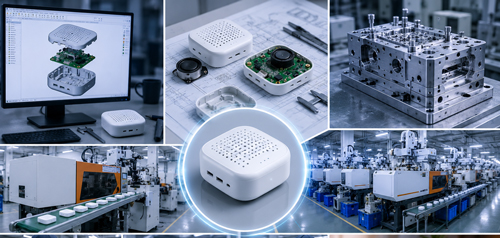
AI Hardware Manufacturing Services
DTG TECH provides AI hardware manufacturing services for AI consumer products, including AI device prototyping, plastic housing development, mold manufacturing, smart device injection molding, and OEM AI product development.
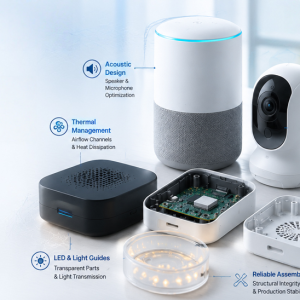
Smart Home Device Enclosure Manufacturing
Smart device enclosure development, mold manufacturing, injection molding, and consumer electronics housing engineering support.
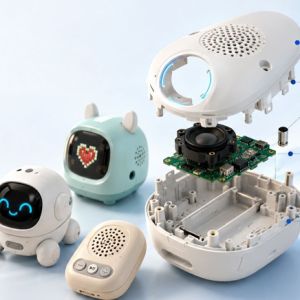
AI Toy Plastic Housing Manufacturing
Smart toy enclosure development, mold making, and injection molding for AI toy hardware projects.
Start Your Voice Interaction Device Housing Project
If you are developing a voice AI device, smart speaker, AI companion product, or voice-enabled consumer electronic product, DTG TECH can help transform your concept into a manufacturable acoustic plastic housing.
Please send us your 3D files or sketches, product dimensions, estimated production quantity, material requirements, speaker and microphone layout, and electronic integration requirements.
Our engineering team will respond within 24 hours with manufacturing recommendations and technical feedback.
Ready To Start Your Project?
Tell us about your part, material, quantity, or mold requirements. Our team will review your project and provide a practical manufacturing solution.